What is tennis elbow or lateral epicondylitis?
Tennis elbow or lateral epicondylitis is an extremely common injury that originally got its name as it appeared in a high proportion of tennis players. Nevertheless it commonly manifests in a vast proportion of people who do not play tennis at all. Tennis elbow occurs most commonly in the tendon of the extensor carpi brevis muscle at approximately 2cm below the outer edge of the elbow joint or lateral epicondyle of the humerus bone.
Specific inflammation is rarely present in the tendon but there is an increase in pain receptors in the area making the region extremely tender.
Symptoms of tennis elbow / lateral epicondylitis
- Pain about 1-2 cm down from bony area at the outside of the elbow (lateral epicondyle)
- Weakness in the wrist with difficulty doing simple tasks such as opening a door handle or shaking hands with someone.
- Pain on the outside of the elbow when the hand is bent back (extended) at the wrist against resistance.
- Pain on the outside of the elbow when trying to straighten the fingers against resistance.
- Pain when pressing (palpating) just below the lateral epicondyle on the outside of the elbow..
Other injuries and conditions with symptoms similar to tennis elbow:
- The symptoms for this injury are very similar to Entrapment of the radial nerve which we recommend you also have a look at.
- It is important to have the neck examined as well as elbow pain can be referred from problems in this region. See the neck pain page for further details.
Causes of tennis elbow
Tennis elbow is often caused by overuse or repetitive strain caused by repeated extension (bending back) of the wrist against resistance. This may be from activities such as tennis, badminton or squash but equally from activities such as brick laying, excessive use of a screwdriver and computer typing.
A poor backhand technique in racket sports can be a cause. This is commonly seen in players who arrive late for a backhand meaning that they cannot get their body behind the ball. They play the shot with a limp or bent wrist instead of a firm wrist and are not using the strength of the whole arm or the twisting movement of the trunk.
This means that the wrist has to compensate and in doing so injuries are caused to muscles and tendons around the elbow. The wrist should be firm and not bent when the ball is struck so the forces can be spread over the arm, shoulder and the rest of the body. If you imagine a ball traveling at 70mph and hitting the end of a long lever made up of your arm and the tennis racket then all that force is focused on the tiny insertion of the tendon of the lateral epicondyle causing tennis elbow symptoms.
Another problem can be a racket grip that is too small. A small grip will mean the muscles in the elbow must work a lot harder leading to structural changes in the tendon. The majority of people with tennis elbow are between 40 and 50 yrs but it can affect athletes of any age. (Is this because 40 - 50 yr olds are the ones with more time to play?)
Two types of onset are commonly seen:
Sudden Onset: Sudden onset of tennis elbow occurs in a single instance of exertion such as a late back hand where the extensors of the wrist become strained. This is thought to correspond to micro-tearing of the tendon.
Late Onset: This normally takes place within 24-72 hours after an intensive term of unaccustomed wrist extension. Examples may be a tennis player using a new racket or even a person who's spent a weekend doing DIY.
Tennis elbow treatment
No single treatment has been shown to be totally effective, however a combination of the treatments below are known to resolve tennis elbow over time. Each individual will react differently to different treatments.
What can the athlete do?
- Apply ice or cold therapy to the elbow (20 min's on up to six times a day). This will help reduce pain and inflammation if present.
- Rest - an extremely important component in the healing of this injury.
- Wear a brace or support (video) to protect the tendon whilst healing and strengthening, particularly when returning to playing / equivalent. The brace should not be put on the painful area but rather approximately 10cm down the forearm.
- As with all soft tissue injuries a comprehensive rehabilitation program should be carried out.
What can a sports injury specialist or doctor do?
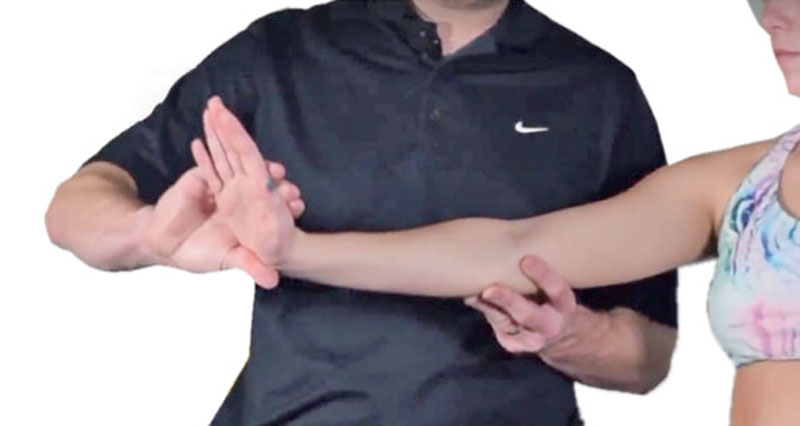
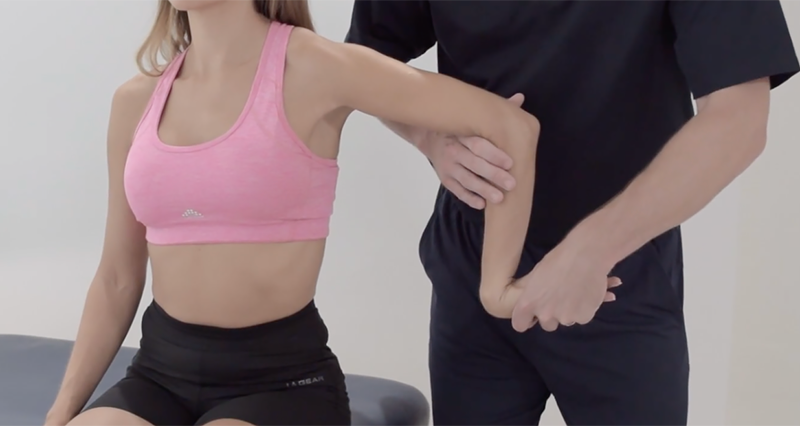
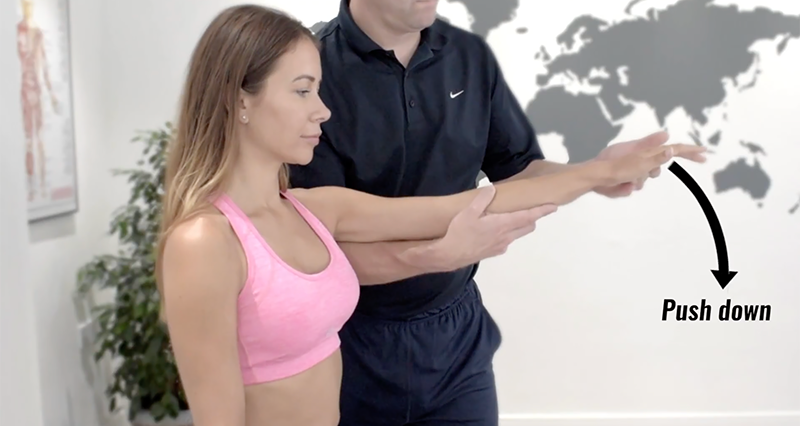
- Correctly diagnose the condition: This may be done by carrying out Mills' test - resisted wrist extension with the palm facing the floor (pronated) and moving the hand sideways in the direction of the thumb. If pain is elicited then this is a positive sign for the test.
- Another test is to resist extension of the middle finger-pain is a strong indicator for tennis elbow.
- Rule out neural involvement
- Advise on pain control-such as NSAID's like Ibuprofen.
- Apply ultrasound or laser treatment to help reduce pain and inflammation as well as stimulate healing.
- Use manual therapy treatments such as massage therapy, myofacial release and/or transverse friction techniques across the tendon
- Try acupuncture which has been shown to be extremely effective for tennis elbow.
- Advise on rehabilitation to return the athlete to full fitness.
- Provide advice on neural stretching exercises if nerve tissue involvement is suspected
- Give a steroid injection to reduce inflammation if present
- Identify and correct any predisposing factors which lead to the onset of tennis elbow. Your tennis coach should also be able to provide some advice with regards your backhand technique.
- Operate - if the conservative treatments have failed for about a year then this may be considered.
How long with tennis elbow take to get better?
Tennis elbow may heal quickly within two weeks but it could last for up to two years. When the symptoms have settled down it is essential full rehabilitation and strengthening of the elbow takes place.
Prevention:
- Correct technique - play the backhand with the whole body not just the wrist!
- Use a forearm brace or heat retainer if you have a weak wrist or elbow.
- Do not play with wet, heavy balls.
- Use a light racket if you do not play very often.
- Make sure your strings are not too tight.
- Be aware of too much strain on the elbow for example when doing DIY or using a keyboard. Apply ice after use to reduce any inflammation early.
|