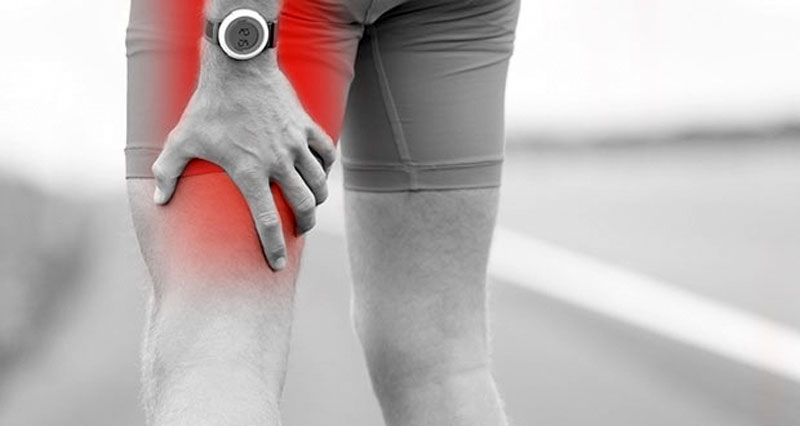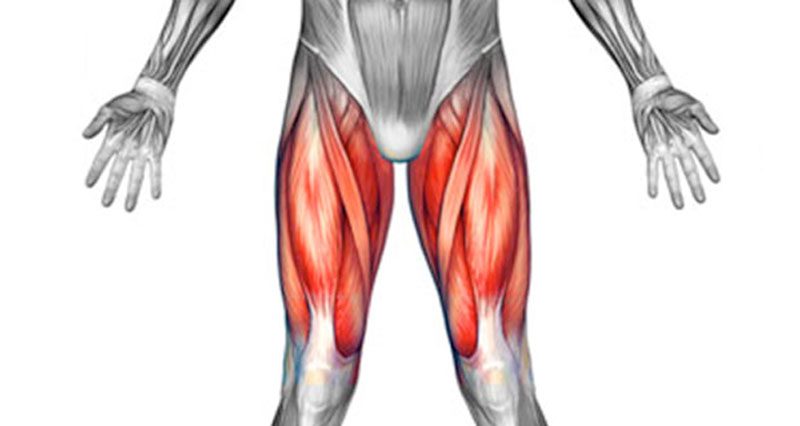
Pain at the front of the thigh is also known as anterior thigh pain. Causes of pain at the front of the thigh include Thigh (quadriceps) muscle strain, contusions, stress fractures and tendonitis.
Medically reviewed by Dr Chaminda Goonetilleke, 24th Jan. 2022
Sudden onset anterior thigh pain
The following injuries occur suddenly and are called acute injuries. They include muscle and tendon strains and fractures. You probably know a specific point in time when your injury occurred:
Quadriceps strain (thigh strain)
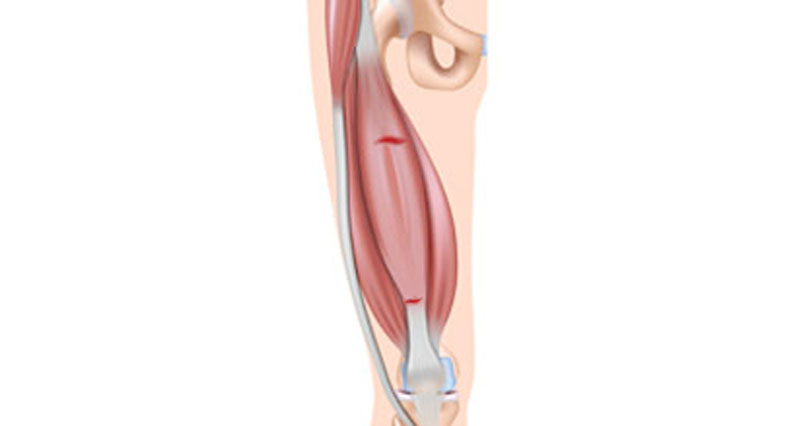
A thigh strain or quadriceps strain is a tear in one of the quadriceps muscles at the front of the thigh. Symptoms typically include:
- Sudden sharp pain at the front of your thigh.
- Swelling may develop depending on how severe your injury is.
- Bruising may also appear later.
Read more on Quadriceps/thigh strain
Go to the Thigh strain rehabilitation program
Quadriceps contusion (thigh contusion)
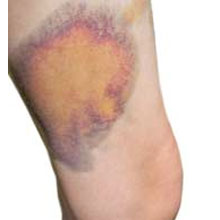
A dead leg, also known as a charley horse, is a bruise or contusion caused by a direct impact or trauma to your leg. Symptoms include:
- Pain at the time of injury
- You may have restricted movement in your leg/muscle
- Your leg may swell up and later bruising may appear
Read more on Thigh contusion
Femur Fracture
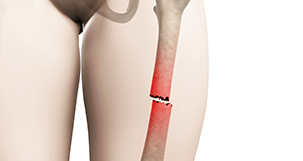
An acute, traumatic femur fracture is a serious and usually fairly obvious injury caused by accident or severe impact. Symptoms include:
- Severe thigh pain.
- Deformity, or the injured leg appears shorter than the other.
- Lots of swelling.
Read more on Femur fracture.
Rectus femoris tendon strain – upper thigh pain
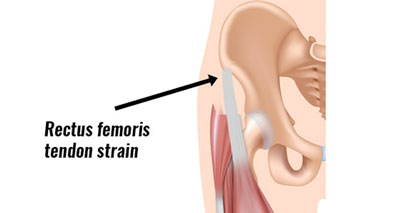
These cause pain at the top of the thigh/front of the hip where the tendon of the powerful rectus femoris muscle originates. It can be difficult to distinguish between a tendon strain and an avulsion injury. Therefore, seek professional medical advice if you suspect a Rectus femoris tendon injury.
Read more on the Rectus femoris tendon strain.
Gradual onset anterior thigh pain
The following injuries tend to occur gradually over time through overuse, or from an acute injury which has not healed properly.
Myositis Ossificans
Myositis ossificans occur as a complication of not treating a contusion correctly. It involves a small growth of bone within the muscle. Symptoms include:
- Muscle pain, particularly during exercise.
- Restricted range of movement.
- A hard lump felt deep in the muscle.
- An X-ray confirms the diagnosis showing any bone growth.
Read more on Myositis Ossificans.
Femur Stress Fracture
The femur bone is the long thigh bone. Prolonged overuse can cause a stress fracture known as a femoral stress fracture. Symptoms include:
- Pain that develops gradually as a dull ache.
- Pain is made worse when a bending force is applied to the femur.
Read more on Femur stress fracture.
Upper thigh pain
The following cause gradual onset pain at the front top of the thigh”
Rectus femoris tendon inflammation/tendinopathy
This causes gradual onset pain at the front of the hip where the Rectus femoris tendon attaches to the pelvis. It may occur through overuse, or follow a tendon strain/rupture which fails to heal properly.
Other causes of anterior thigh pain which should not be missed:
The following injuries and conditions are not particularly common but it is important they are not overlooked if you have pain in the front of the thigh.
Slipped capital femoral epiphysis
The injury happens when the epiphysis (upper end of the bone) where the bone growth plates are located, slips away from the rest of the bone.
It is more common in boys aged 11 to 16 years old and occurs gradually over a period of time.
Read more on Slipped capital femoral epiphysis
Perthes’ disease
Perthes’ disease affects children, most commonly aged between four and eight, but can also occasionally occur in younger children and teenagers.
Symptoms include an ache in the thigh, groin, or knee. The patient may have a noticeable limp. Medical help is needed to diagnose this condition as early as possible to try to prevent and limit any future problems.
Read more on Perthes’ disease
Compartment syndrome
This occurs when increased pressure builds up within the muscle compromising the blood supply and nerve supply
Tumour
Tumours can also cause front thigh pain.
Rehabilitation & exercises
We have the following rehabilitation programs available: