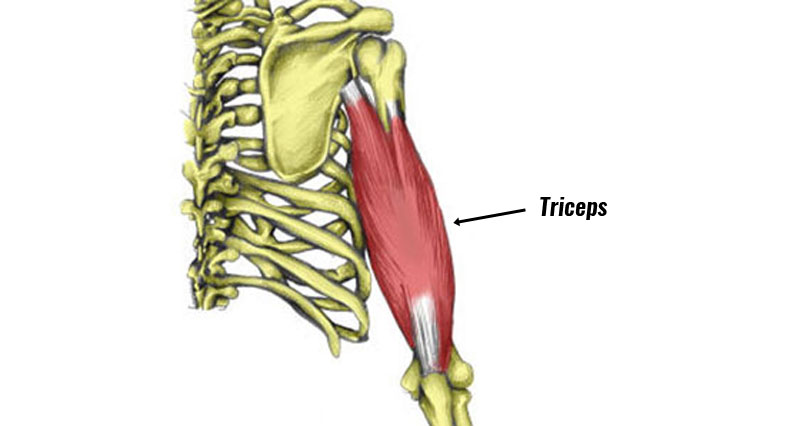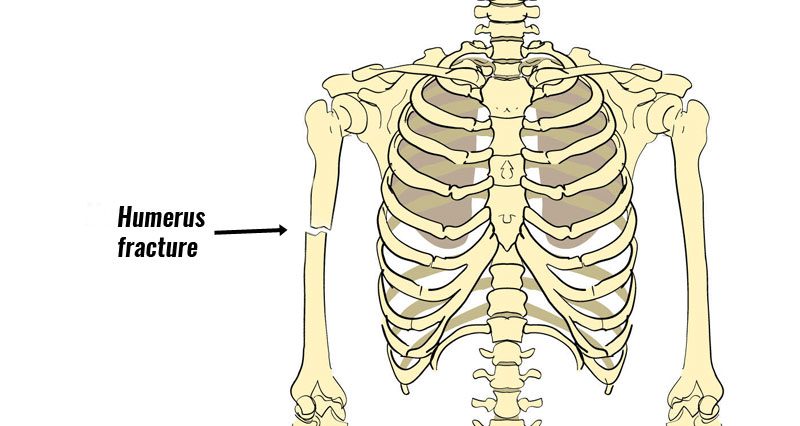
A humerus fracture is a break in the upper arm bone. They occur anywhere in the bone, from the neck of the humerus near the shoulder to the distal end at the elbow. A form of fracture close to the elbow is known as a supracondylar fracture.
Humerus fracture symptoms
- Symptoms of a humerus fracture include instant pain in the arm at the time of injury.
- The athlete will have difficulty moving the arm either bending the elbow or raising the arm upwards.
- There may be deformity of the arm if the bone is displaced.
- Bruising and swelling are common. In compound fractures, the bone pierces the skin.

What is a Humerus fracture?
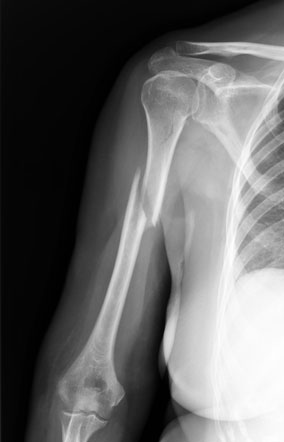
A fracture is the same thing as a break. The two terms are completely interchangeable. A fracture can be either an acute fracture which occurs due to a direct impact or force or a stress fracture which gradually develops over time. Stress fractures of the humerus are rare as it is not a weight-bearing bone. They are more common in the bones of the legs and feet.
A rare form of fracture which is most commonly seen in throwing athletes (e.g. Javelin or baseball etc) involves a spiral fracture to the midshaft of the bone, just below the attachment of the deltoid muscle.
A fracture to the humerus will most often occur as a result of a fall, often onto an outstretched arm. Car accidents may also cause a humerus fracture.
Treatment of humerus fractures
- Seek medical attention immediately if a fracture is suspected.
- An X-ray will be ordered to confirm the fracture and assess the presence or amount of displacement. The arm will usually be placed in a temporary cast or splint whilst the swelling goes down.
- A full cast is then fitted 2-3 days later and stays in place for 4-8 weeks.
- If the two ends of the bone are displaced, or the bone is broken into more than 2 parts, surgery may be required. This will be used to realign the bone and fix the 2 (or more) parts using pins or wires, whilst the bone heals.