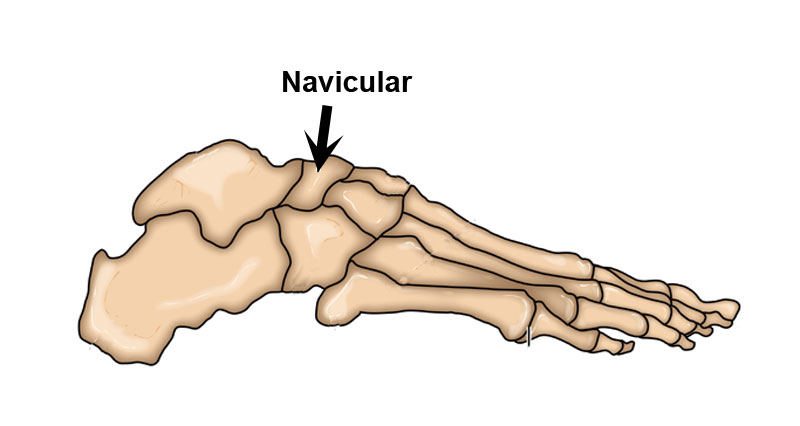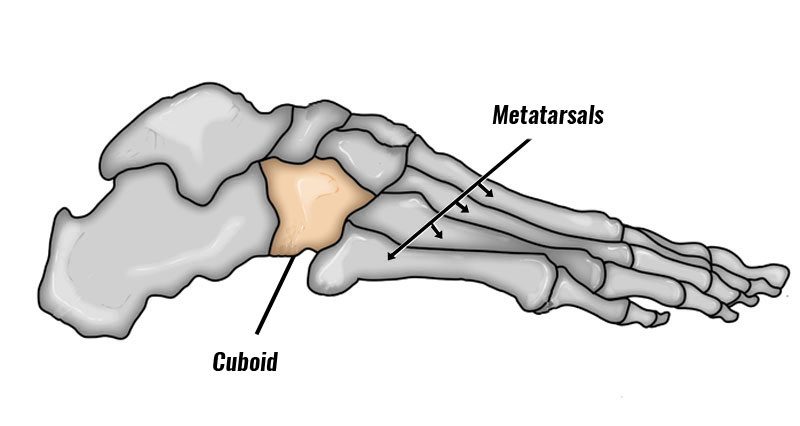
Cuboid syndrome occurs when the Cuboid bone in the foot partially dislocates. It often occurs in conjunction with peroneal tendonitis.
Medically reviewed by Dr Chaminda Goonetilleke, 20th Jan. 2022
Symptoms
Signs and symptoms of Cuboid syndrome are very similar to ankle sprains and include:
- Pain on the outside of your foot when bearing weight.
- Many patients with Cuboid syndrome significantly overpronate. This is where the feet roll in or flatten.
What is Cuboid Syndrome?
Cuboid syndrome occurs when the Cuboid bone in the foot partially dislocates.
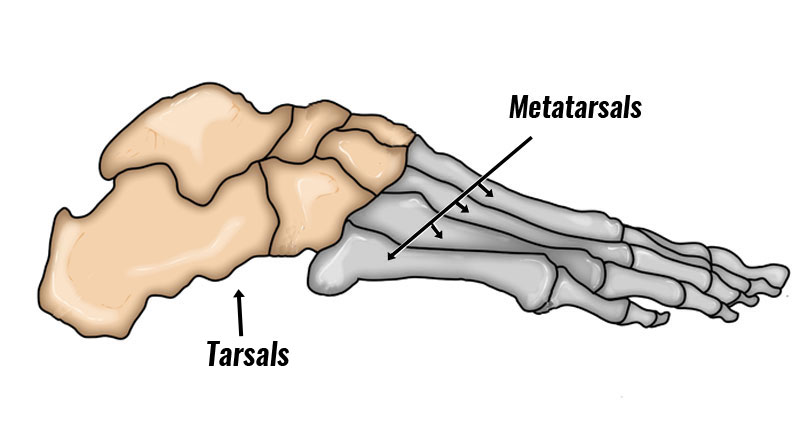
It is one of 7 tarsal bones and is located on the outside of the foot, just in front of the ankle.
A partial dislocation occurs at the calcaneocuboid joint, between the calcaneus (heel bone) and the cuboid bone.
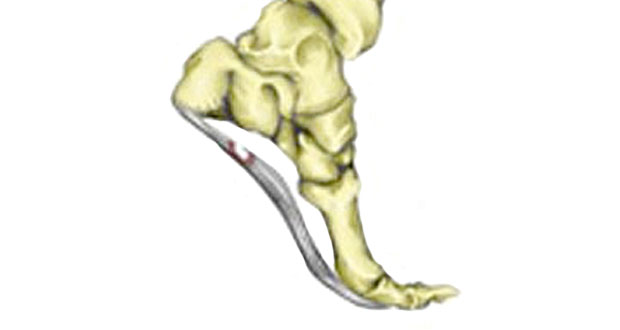
The peroneus longus muscle exerts an eversion force on the cuboid bone. If it pulls too hard on the cuboid bone, then the bone partially dislocates.
Causes
It usually occurs after a bad ankle sprain. However, it can happen when no other injury has occurred.
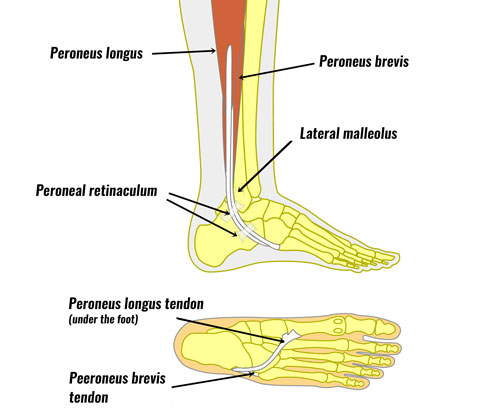
The peroneal muscle which attaches to the bone pulls on it too hard. Excess traction causes it to partially dislocate (sublux).
Cuboid syndrome treatment
Your doctor or surgeon physically manipulates (reduces) your cuboid bone back into position.
They may pad and tape your foot to keep the ‘reduced’ bone in position.
You may also need arch support or orthotic-type shoe insoles. These help correct biomechanical problems such as overpronation.
Corticosteroid injections are sometimes used.
If peroneal tendonitis is a contributing factor, then this needs to be treated with rest, ice and a gradual rehabilitation program of stretching and strengthening exercises.
Stretching exercises are particularly important if your peroneal muscles are tight. Tight peroneal muscles cause excess traction on the cuboid bone.
Deep tissue massage to the calf muscles and peroneal muscle specifically also helps relax the muscle. As a result, traction on the cuboid is reduced.