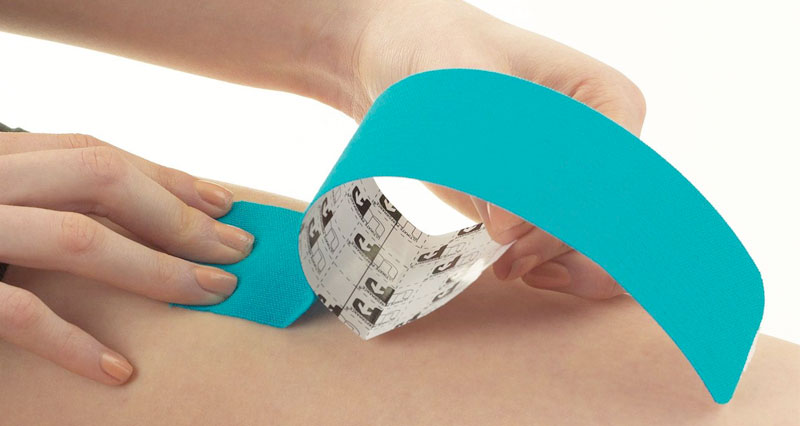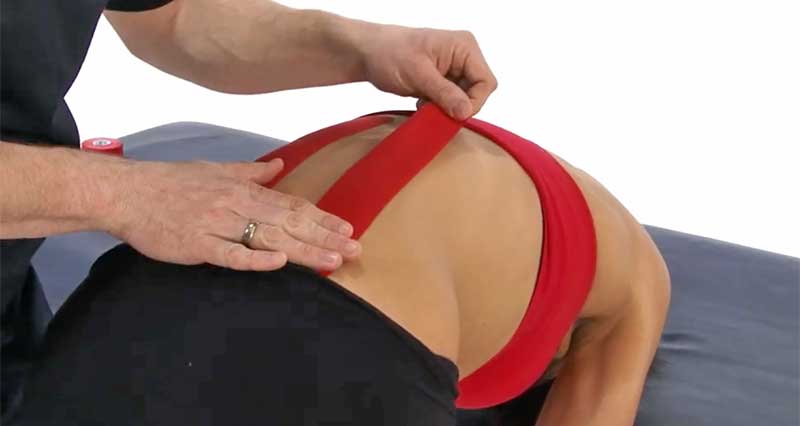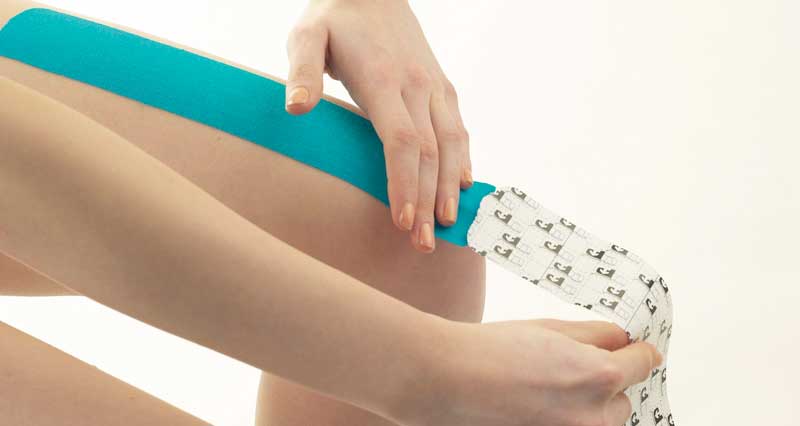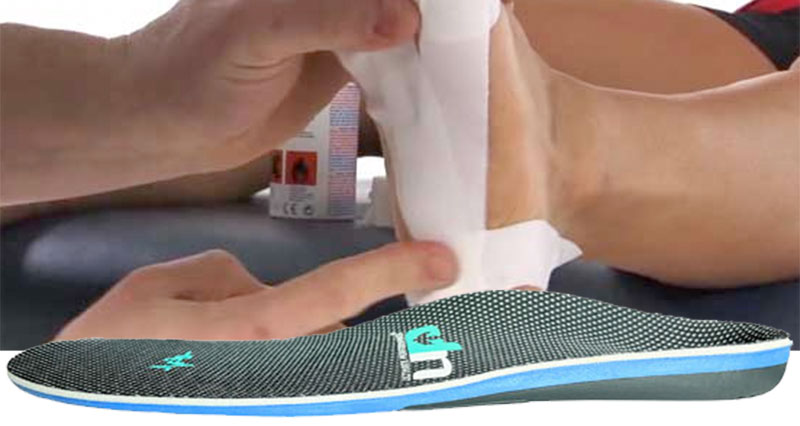
LCL sprain taping helps protect the lateral ligament following a lateral knee ligament sprain. It is used during treatment and rehabilitation phases, as well as when returning to normal training.
Medically reviewed by Dr. Chaminda Goonetilleke, 31st Dec. 2021
Aim of LCL sprain taping
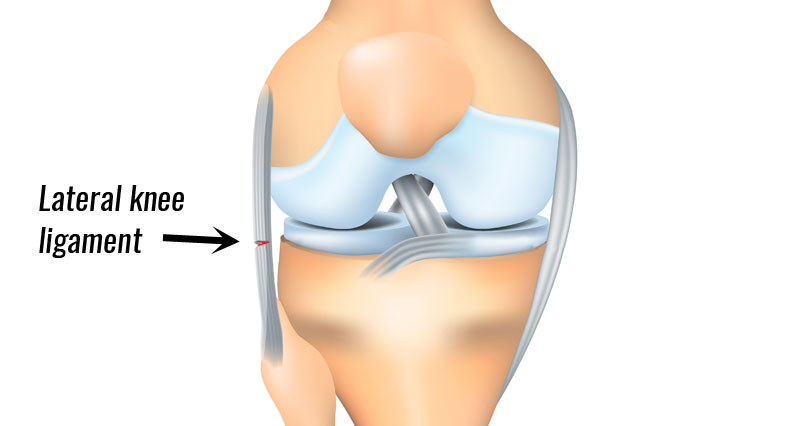
The aim of taping for a lateral knee ligament sprain is to provide support and protection to the injured ligament. The LCL is a narrow ligament which connects the femur (thigh bone) to the fibula on the outside of the knee.
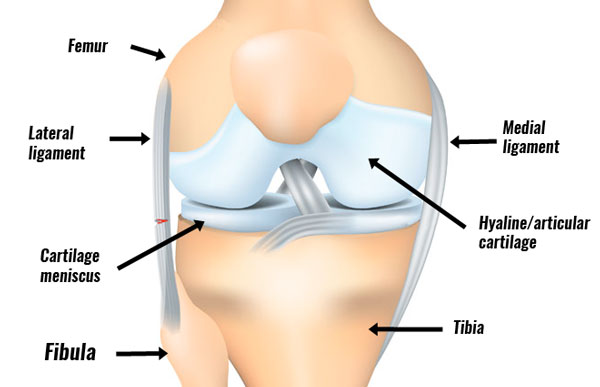
If the LCL is sprained, this means it is stretched, partially torn or in rare cases completely ruptured. Support strips of tape are applied along the length of the injured ligament to ‘reinforce’ it. The support strips help prevent sideways movement of the knee joint, which would put stress on the LCL and as a result prevent healing.
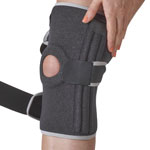
If you have had badly torn or stretched ligaments in the past then lateral knee ligament taping provides extra support and stability to the joint, in the same way a hinged knee brace would.
Tape provides a high level of support for a shorter period of time. Tape will naturally stretch within the first hour or two, depending on the demands you place on it. Then it should be re-applied.
Knee supports
Hinged knee braces are knee supports with solid metal stips down the side, which are hinged in the middle. It provides a high degree of support (less than good taping), for a longer period of time.
How to tape for an LCL knee sprain
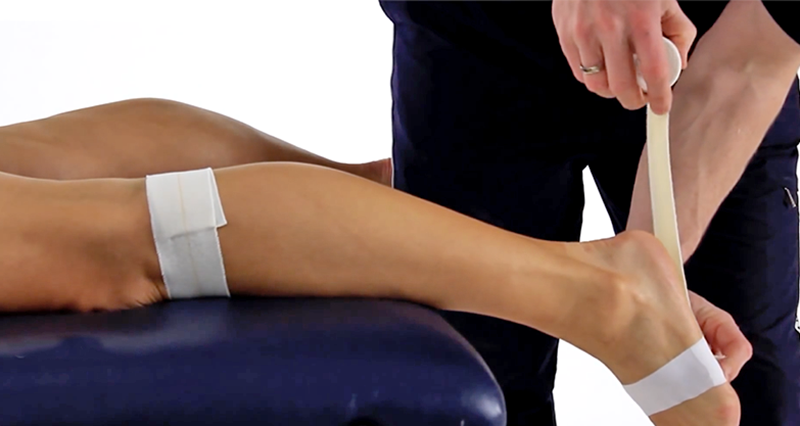
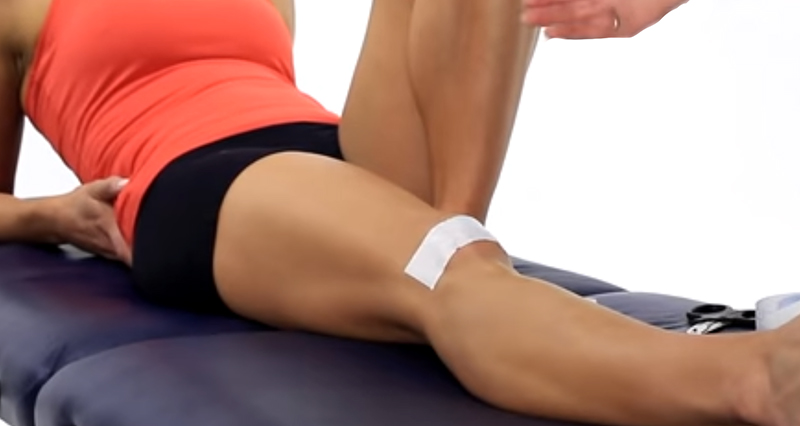
Step 1 – anchor strips
- Place the knee in a relaxed position, bent to about 30 degrees.
- Apply anchor strips above and below the knee. Use elastic tape to prevent restricted circulation as the muscles expand during exercise.
Step 2 – support strips
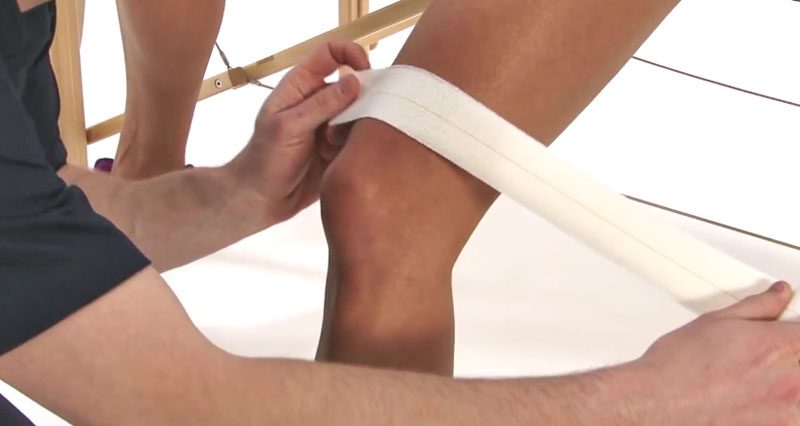
- Place support strips along the side of the knee with nonstretch zinc oxide sports tape in a cross formation.
- These provide support for protecting the lateral ligaments from excess stress.
Step 3 – re-apply anchors
- Finally, apply fixing strips over the initial anchor strips to hold the support strips in place.
References
- LaPrade RF, Wentorf FA, Fritts H et al. A prospective magnetic resonance imaging study of the incidence of posterolateral and multiple ligament injuries in acute knee injuries presenting with a hemarthrosis. Arthroscopy 2007;23(12):1341–7