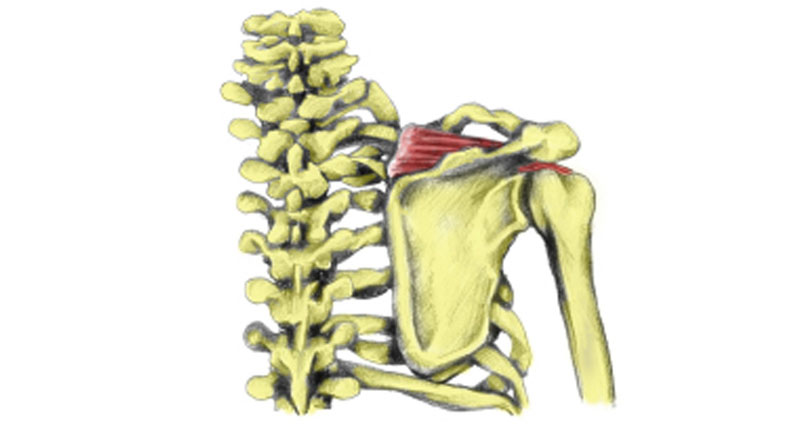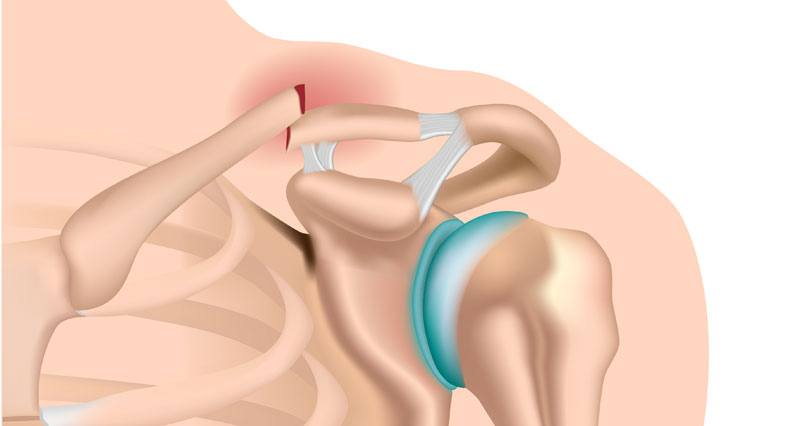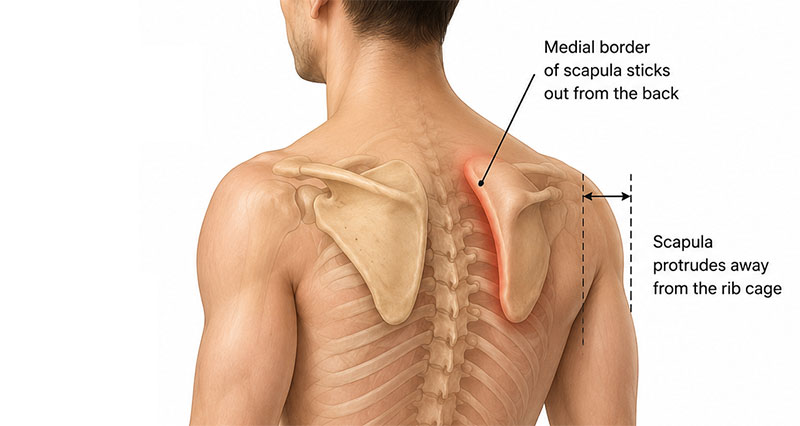
A winged scapula, also called scapular winging, is a condition where the shoulder blade (scapula) sticks out from the back instead of lying flat against the rib cage. It is usually a sign that the muscles responsible for stabilising the shoulder blade are weak or paralysed, rather than being an injury itself.
ADVERT
Scapular winging can make everyday activities such as lifting your arm overhead, pushing open doors or carrying objects difficult and painful.
Winged scapula symptoms
Common symptoms include:
- One shoulder blade protrudes noticeably from the back, particularly when pushing against a wall.
- Pain or aching around the shoulder blade.
- Weakness when lifting the arm overhead.
- Difficulty pushing, throwing or performing overhead activities.
- Shoulder fatigue during everyday tasks.
- Discomfort when sitting against a chair due to pressure on the prominent shoulder blade.
If the condition is caused by nerve damage, you may also notice reduced shoulder strength and difficulty fully raising your arm.
Diagnosing a Winged Scapula
A winged scapula is usually diagnosed during a physical examination.
Your healthcare professional may ask you to perform a wall push-up. During this movement, the shoulder blade often becomes much more prominent if the serratus anterior muscle is weak.
Further investigations such as nerve conduction studies, electromyography (EMG) or MRI scans may be required if nerve damage is suspected.
What Causes a Winged Scapula?
A winged scapula develops when the muscles that normally hold the shoulder blade against the chest wall stop working properly.
The most common causes include:
Serratus Anterior Weakness
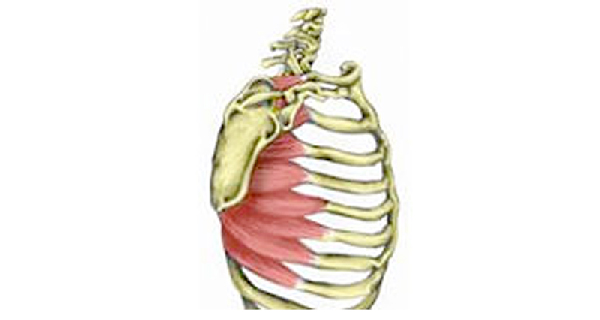
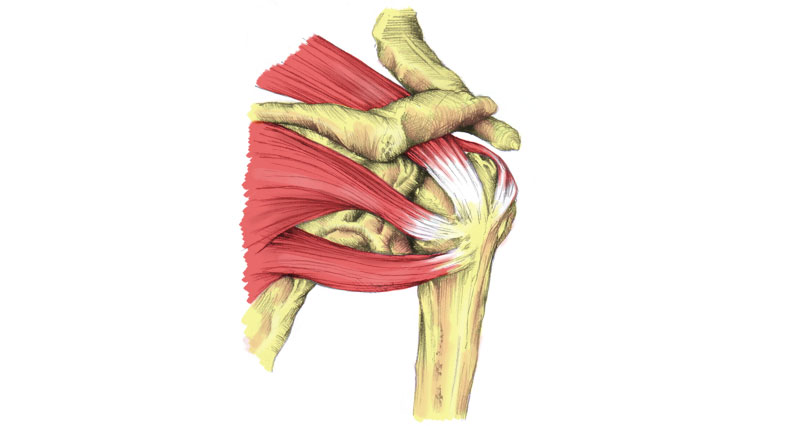
The serratus anterior is the primary muscle responsible for holding the scapula flat against the rib cage. Weakness or paralysis allows the inner border of the shoulder blade to lift away from the chest.
This may occur because of:
- Long thoracic nerve injury
- Direct trauma to the shoulder
- Repetitive overhead activities
- Heavy lifting
- Following viral infections (rarely)
Long Thoracic Nerve Injury
Damage to the long thoracic nerve prevents the serratus anterior muscle from functioning normally. This is one of the most common causes of true scapular winging.
The nerve may be injured following:
- A blow to the shoulder
- Sudden traction injuries
- Sports injuries
- Surgery around the chest or shoulder
- Repetitive overhead movements
Other Causes
Less commonly, scapular winging can result from:
- Spinal accessory nerve injury affecting the trapezius muscle
- Dorsal scapular nerve injury affecting the rhomboids
- Shoulder instability
- Poor posture combined with muscle weakness
- Muscular dystrophy or other neurological disorders
ADVERT
Treatment for a Winged Scapula
Treatment depends on the underlying cause.
Reduce Pain
During the early stages:
- Apply ice or cold therapy for 10-15 minutes every 2-3 hours if the area is painful.
- Avoid activities that worsen symptoms, particularly repetitive overhead movements.
- Maintain good posture throughout the day.
Rehabilitation Exercises
Most patients benefit from a structured shoulder rehabilitation programme aimed at restoring normal scapular control.
The main goals are to:
- Strengthen the serratus anterior
- Improve lower trapezius strength
- Improve shoulder blade control
- Restore normal shoulder movement
- Correct postural muscle imbalances
Recovery can take several months, particularly if nerve irritation is involved.
If symptoms fail to improve, further investigation is recommended. In severe cases caused by permanent nerve damage, surgery may occasionally be considered.
Winged Scapula Exercises
The serratus anterior is often called the “boxer’s muscle” because it is heavily involved during punching movements. Strengthening this muscle helps pull the shoulder blade firmly against the rib cage.
Scapular Protraction
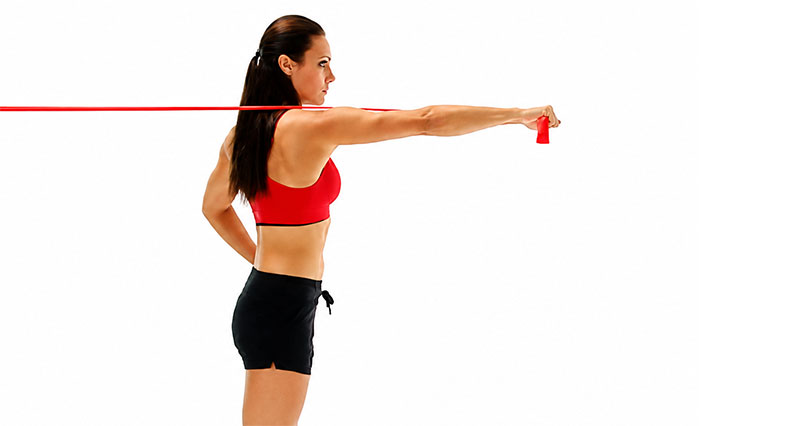
This exercise specifically targets the serratus anterior.
- Attach a resistance band at shoulder height.
- Hold the band with your elbow bent.
- Push your arm forwards in a punching motion until the elbow is straight.
- Continue reaching forwards by allowing the shoulder blade to move around the rib cage.
- Slowly return to the starting position.
Perform 2-3 sets of 10-15 repetitions.
Serratus Press

The serratus press strengthens the shoulder blade stabilisers without excessive shoulder movement.
- Lie on your back holding a medicine ball or dumbbell above your chest.
- Keep your elbows straight throughout.
- Push the weight towards the ceiling by lifting only the shoulder blades.
- Slowly lower the shoulders back down.
Perform 2-3 sets of 10-15 repetitions.
Wall Push-Up Plus
This is one of the most effective exercises for activating the serratus anterior.
- Stand facing a wall with your hands shoulder-width apart.
- Perform a wall push-up.
- At the end of the movement, push your shoulders forwards slightly further without bending your elbows.
- Slowly return.
Repeat 10-15 times.
When Should You Seek Medical Advice?
Seek professional assessment if:
- The winging develops suddenly after an injury.
- You cannot lift your arm above shoulder height.
- You experience numbness or weakness.
- Symptoms fail to improve after several weeks of rehabilitation.
- The shoulder blade becomes increasingly prominent.