Medically reviewed by Dr. Chaminda Goonetilleke, 8th Dec. 2021
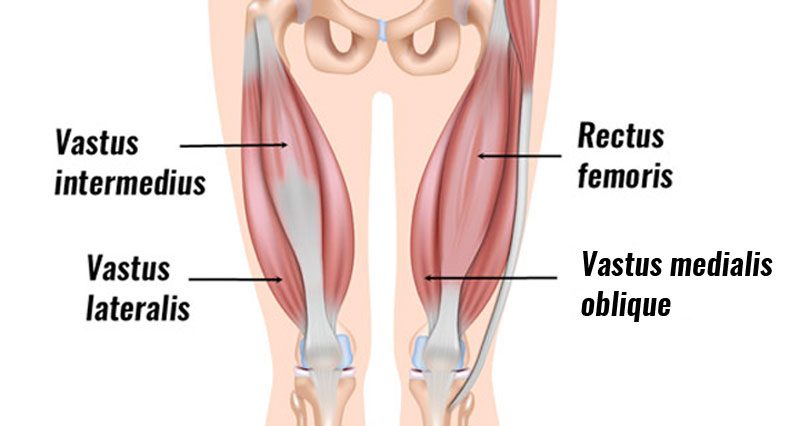
VMO is short for vastus medialis oblique muscle. It is one of the quadriceps muscles on the inside front of the thigh, just above the knee. Strengthening this muscle is particularly important for knee rehabilitation as it helps control the position of the patella (kneecap).
Introduction to VMO strengthening exercises
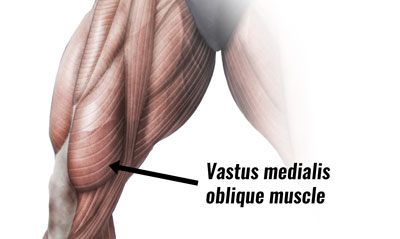
The vastus medialis obliquie muscle (VMO) is important for keeping the kneecap tracking correctly. This means it stabilizes the patella as it moves.
In healthy, pain-free individuals the fibers of the VMO are active throughout the range of movement.
In patients with patellofemoral knee pain or chondromalacia patella, the muscle fibres contract in phases inconsistently. As a result, they also fatigue easily.
Patella tracking & Q angle
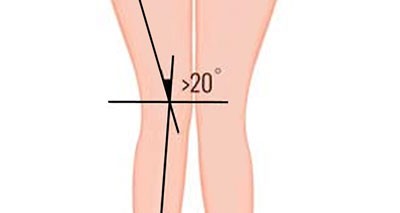
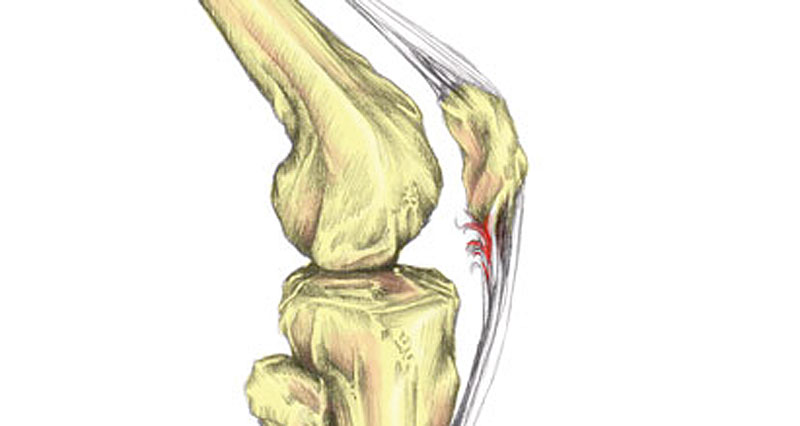
The specific role of the VMO is to stabilise the patella within the patella groove and to control the tracking of the patella when the knee is both bent and straight.
Mis-firing and weaknesses in the VMO cause mal-tracking of the patella and subsequent damage to surrounding structures and aching pain.
- More on Q angle
Is my VMO muscle contracting properly?
First, you must ensure that your VMO is contracting properly. Long-term injuries such as Patellofemoral knee pain are often caused by VMO malfunction.
To check the contraction of VMO, sit with your legs out in front and a rolled-up towel under the injured knee.
Put your fingers over the area of the VMO muscle on the inside of the thigh and contract the muscle. The knee should push down into the towel and the leg straightens so that the foot lifts off the couch.
You should feel a strong contraction of the muscle under your fingers.
If the muscle does not contract, continue to practice whilst pressing down gently on the muscle and concentrate on contracting the muscle fibers underneath your fingers.
If the muscle does contract, continue with strengthening exercises.
Patellofemoral taping
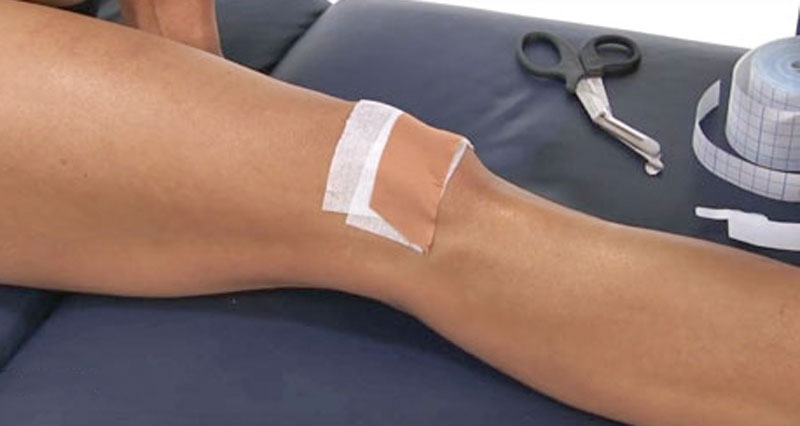
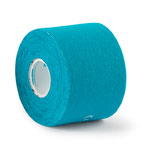
If your patella is not tracking properly, or if you have pain when trying to perform VMO exercises then taping your patella can help.
Tape is applied to the patella with support strips pulling it away from painful areas. This may enable you to perform strengthening exercises without pain.
- More on Patellofemoral pain taping
VMO strengthening exercises
The following exercises strengthen the vastus medialis oblique muscle:
Knee extension
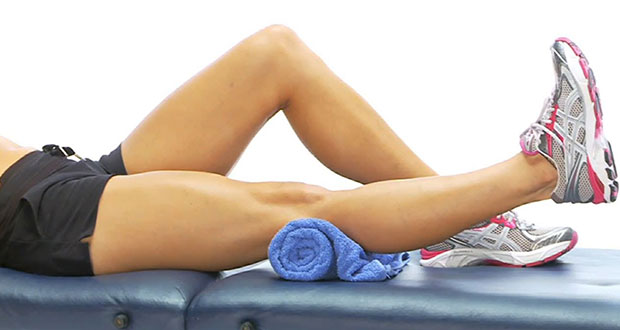
Sit on a chair, or the floor and place your hand on your VMO muscle to palpate (feel) it contracting.
Slowly straighten your knee ensuring your VMO muscle on the inside of your thigh contracts.
Maintain the contraction throughout the movement as you fully straighten the knee and bend it again.
Turning your leg outwards can increase the load on the VMO muscle.
Repeat these exercises twice daily until you can maintain a strong constant contraction 10 times in a row.
Heel drops
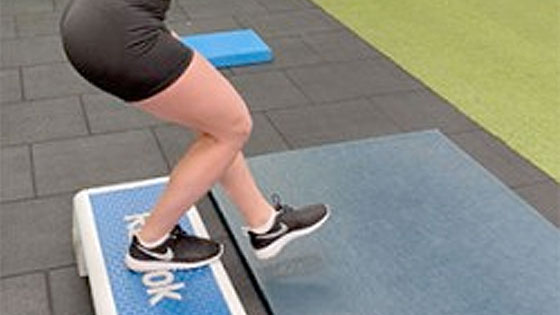
Once you can hold the contraction as above, start to integrate this into functional movements such as heel drops and lunges.
Heel drops are performed by standing on a step and dropping the heel forwards off the step to slightly bend the knee.
Don’t go too far, just enough to feel the vastus medialis oblique contracting. It is important to keep the knee in a straight line and control the hips.
Many therapists will advocate taping the patella whilst doing this exercise to ensure correct tracking.
Lunge
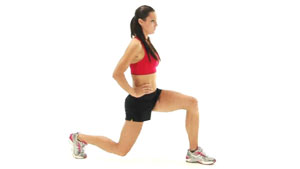
For the lunge, with a split stance initially place one or two fingers on the VMO of the front leg.
- Perform a lunge by bending the front knee and dropping the back knee towards the floor. Maintain VMO contraction throughout the lunge.
- Initially perform as many as you can while maintaining a strong constant contraction and gradually increase the number up to 20.
Further exercises
- Repeat this process in step-up exercises too, although you may not always be able to reach to feel the muscle contract.
- Try performing a squat against a wall by sliding your back down the wall until your knees are at a right angle. Your shins should remain vertical.
- Place a large ball such as a football in between your knees and squeeze it. This activates the adductor muscles and because VMO arises from the tendon of adductor Magnus, also stimulates VMO to contract. Hold for 3 seconds and repeat 10 times, gradually increasing to 5-second holds and 20 repetitions.