Our peroneus brevis injury rehabilitation program is based on four stages. The first priority is to reduce pain and inflammation. Then when pain allows improve flexibility, build strength, coordination, and gradually return to full fitness.
Acute phase
This begins immediately after injury and lasts at least 48 hours for a mild injury. More severe injuries require a longer rest period of a couple of weeks or more. If you have an avulsion strain then you may need to immobilize your foot in a cast.
- Apply the cold therapy PRICE principles of protection, rest, ice, compression, and elevation.
- Cold can be applied for 10 minutes every hour initially, reducing frequency to 3 or 4 times a day as symptoms improve.
- When pain allows and normal daily activities are pain-free, move on to stretching exercises.
Peroneus brevis injury stretching
Stretching exercises for the calf muscles, and in particular the peroneus brevis muscle, should begin as soon as pain will allow. If it hurts to perform any of the exercises then wait longer until there is no pain.
Peroneal muscle stretch
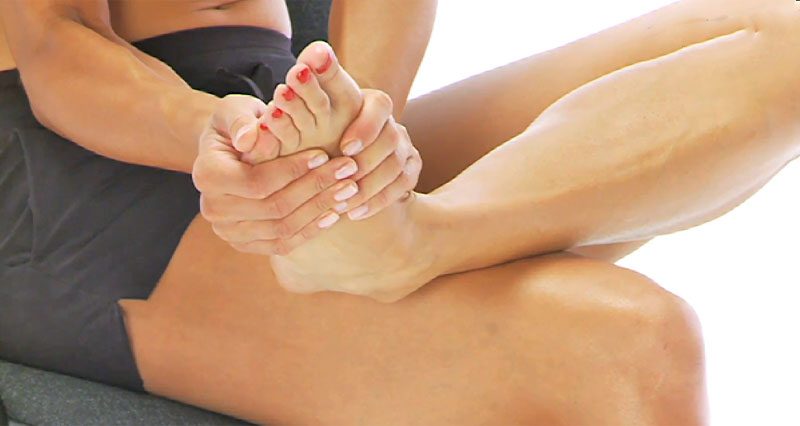
The peroneal muscles are stretched by inverting (turning inwards) the ankle. This specifically targets both the peroneus longus and peroneus brevis muscle. It is the most important stretch for rehabilitation of peroneus brevis tendon injury.
- Using your hands turn your foot inwards so the sole of your foot is facing upwards.
- Very gently increase the stretch using your hands to apply more pressure.
- Hold for 10 seconds initially and repeat 3 times, building up to 20 seconds 4 or 5 times.
- It is important not to overdo this exercise,
particularly in the early stages. Less is sometimes more.
Calf muscle stretches
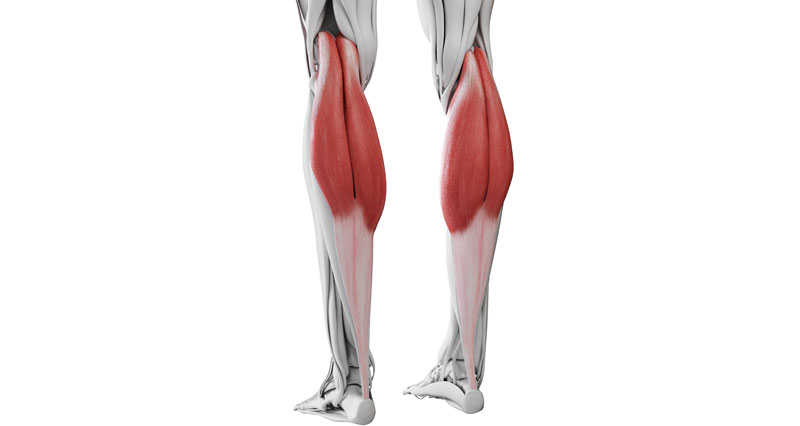
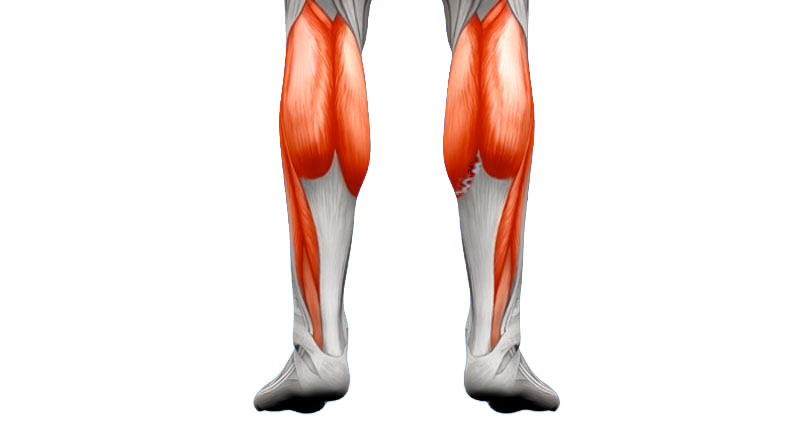
Stretching the muscles at the back of the lower leg is also important. Stretching with both a straight and bent leg will ensure the lower peroneus brevis and soleus muscles are also stretched properly.
- Perform stretching exercises gently 2 to 3 times a day.
- Hold the stretch for 20 to 30 seconds and repeat 5 times.
- Apply ice or cold therapy after stretching in the early stages of rehabilitation to help reduce any resulting inflammation.
- The Gastrocnemius is stretched with the leg straight and the Soleus and Peroneal muscles are stretched best with the knee bent.
Peroneus brevis injury strengthening
Strengthening exercises can begin as soon as they can be performed without any pain. This is likely to be at least a week for most injuries. It is far better to delay loading the injured tendon a bit longer than maybe necessary rather than overloading it too soon and making the injury worse.
Isometric ankle exercises
- Static exercises, also called isometric exercises, are where the joint does not actually move during the exercise.
- Rather, the muscle contracts against an immovable resistance such as a wall, chair, or partner’s hands.
- Hold for 5 seconds, rest for 3 seconds and repeat until you feel the muscles working. This exercise can be alternated with static inversion strengthening to balance the ankle out.
- Strengthening exercises should be done for all ranges of movement of your ankle, not just for the area of injury. This will ensure good all-round strength and help to prevent further injuries.
Dynamic exercises for Peroneus brevis injury
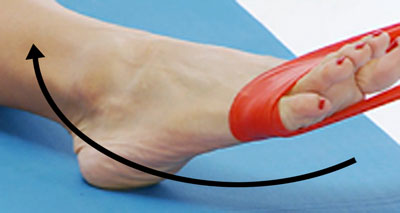
These exercises progress on from isometric strengthening and involve movement. They can be done as long as pain allows. This is usually after 3 or 4 days of isometric or static exercises have been done.
- Using a resistance band or equivalent, the foot is turned outwards against resistance to work the peroneal muscles on the outside of your calf area.
- Resistance can also be applied by a partner’s hands.
- Start with 3 sets of 10 reps and build up. The exact number of reps will vary depending on the amount of resistance and the strength of the ankle.
- Aim for high reps, and low resistance in the early stages.
Calf raise
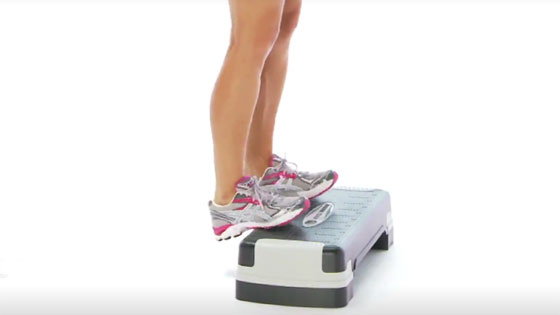
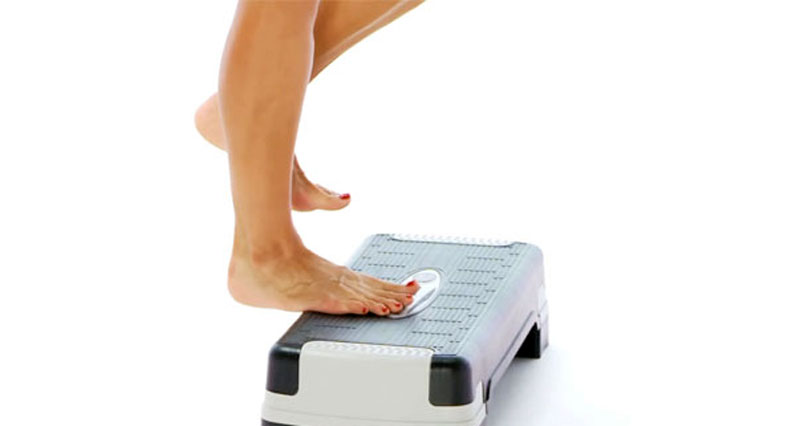
This exercise will strengthen the calf muscles and can be performed against a wall, or on a step.
- Rise up and down on the toes in a smooth movement.
- You should be able to progress quite quickly with this one but aim for 3 sets of 10 and build up steadily, a few each day.
- A beginner’s version of this exercise can be done in a seated position. This works the deeper soleus muscle more than the larger gastrocnemius muscle.
Proprioception exercises for Peroneus brevis injury
When the ankle or foot is injured, the proprioception (or coordination) of the joint is also damaged, making it less stable in the future. Specific ankle exercises to restore proprioception should be done.
These include balancing exercises, such as balancing on one leg with the eyes closed or using a wobble balance board. Using a balance board will strengthen the ankle and improve proprioception at the same time.
Return to full fitness
When you comfortably do all of the Peroneus brevis injury rehabilitation exercises above and you have progressed through specific ankle and wobble board exercises, then you are ready to begin to return to normal training.
- Begin running as long as it is not painful.
- Start with a gentle jog and gradually building up until you can run pain-free for 20 minutes.
- Gradually introduce sideways or lateral movements, and then progress to agility runs. These involve shaper changes of direction with increasing speed.
- If there is any pain either during, after or the next day then apply ice, calm things down and take a step back before progressing.
Continue with stretching, strengthening, and balance board exercises for a few weeks throughout the rehabilitation program and for a few weeks after full sports-specific training has resumed.