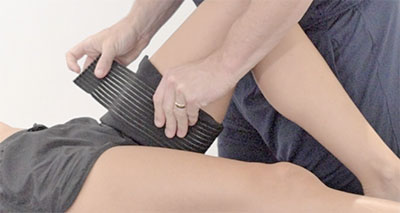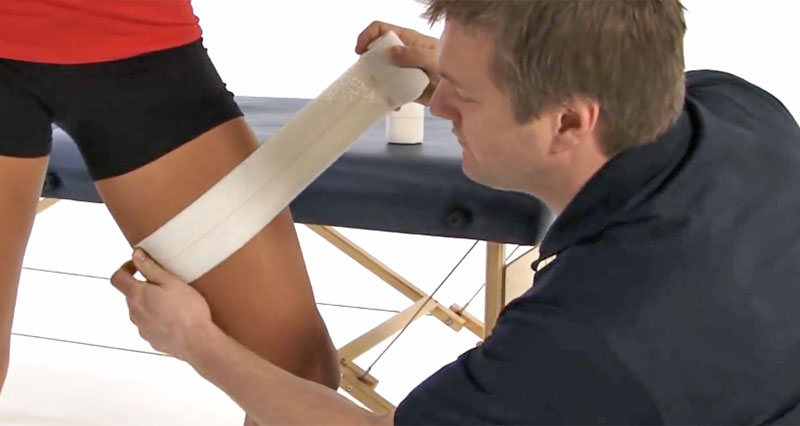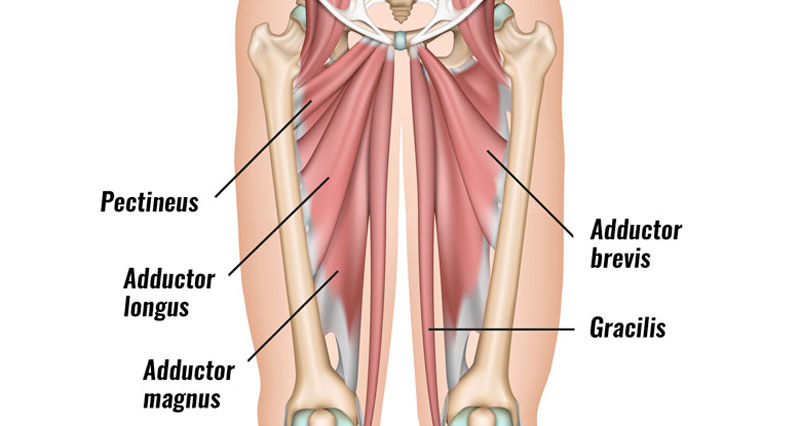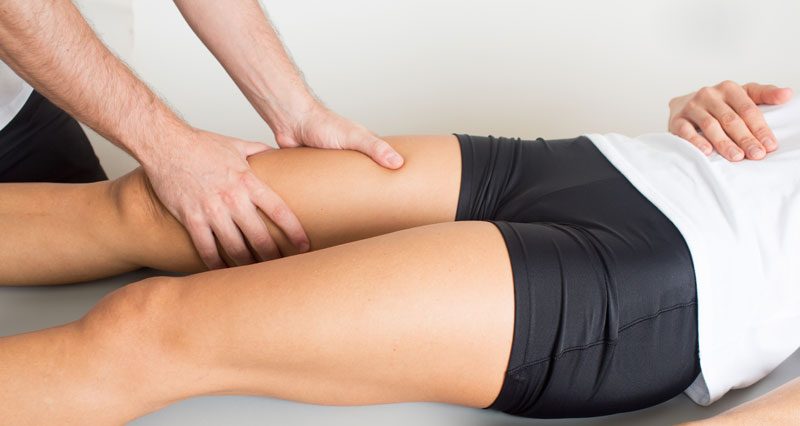
Here we explain how a professional therapist might diagnose a groin strain. Groin pain in particular can have many causes which are not always immediately obvious.
Symptoms
The main symptoms of a groin strain are sudden pain in the groin area, either in the belly of the muscle, or higher up in the groin where the muscle attaches. Groin strains are graded 1, 2 or 3 depending on the extent of the injury.
Grade 1 Groin strain
A Grade 1 strain is a minor tear where less than 25% of fibers are damaged.
- You will most likely have discomfort in the groin area, but be able to walk with little or no pain.
- Often it is not possible to recall the exact point of injury as your pain may only be noticeable after exercise.
- If you press into (palpate) the muscle it may feel tight or tender.
- Stretching the groin muscles may also reproduce pain. Fast, explosive movements are most likely to trigger pain.
- Although there is often swelling as a result of a groin strain, this is often not visible to the eye.
Grade 2 Groin strain
A Grade 2 injury is a moderate tear which involves damage to more than 25% of fibres.
- You will often know when the injury occurred from a sudden sharp pain in the groin during exercise.
- Bruising and swelling will develop over the next few days, but will not always be visible.
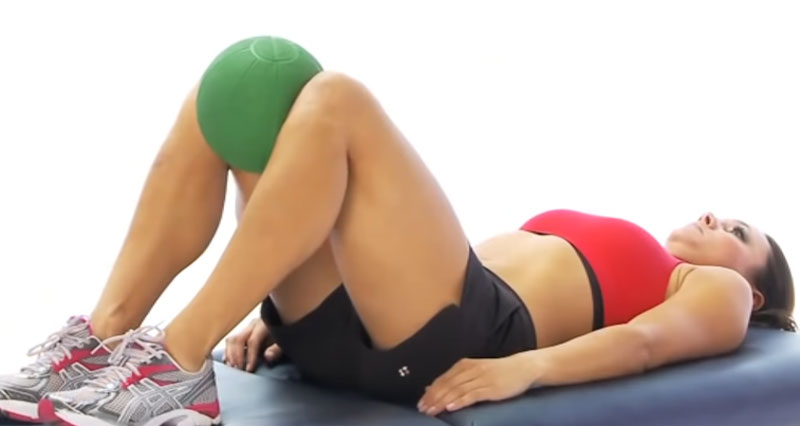
- Attempting to contract your muscle against resistance will be painful. This is easily tested by squeezing a ball between your knees.
- Pain will also be felt on stretching the groin muscles.
Grade 3 Groin strain diagnosis
Grade 3 groin strains are the most serious. They involve either a complete (100%) or almost complete rupture of the muscle.
- You will feel severe pain at the time of injury and be unable to continue.
- Contracting the groin muscles will be impossible from a combination of pain and weakness.
- Substantial swelling and bruising will usually develop around the inner thigh area and this may become visible within 24 to 48 hours.
Groin strain assessment
When diagnosing a Groin strain, your therapist will ask you about how your injury happened and perform a number of assessment tests to help diagnose your groin pain.
Case history
You will be asked about how your injury occured. If it occured suddenly where you will know a specific time the injury occured then a muscle tear (groin strain) is more likely. Whereas if your pain developed gradually over time, or comes and goes then other causes may be more likely.
Range of motion
Testing the range of motion available at the hip joint or stretching the suspected injured muscles may reproduce symptoms. By identifying which movements are most painful, your therapist can deduce which muscles/tendons may be injured.
Moving the leg out to the side, away from the body (abduction) stretches the groin muscles and can give an indication about flexibility. In a healthy athlete, both legs should be equal in terms of degree of stretch or flexibility.
Resisted muscle tests
These involve the therapist applying resistance as the patient takes the injured leg through a range of movement. Muscle tests should be done with your leg in different positions to isolate individual muscles.
If you feel pain on any particular movement, this indicates the type and location of your injury.
Imaging
Accurate Groin strain diagnosis is helped my imaging. Your doctor or therapist may send you for an ultrasound scan or MRI if it is available.
This will help confirm the diagnosis and give more detailed imformation about your injury.
References & further reading
- Serner A, Tol JL, Jomaah N et al. Diagnosis of acute groin injuries: a prospective study of 110 athletes. Am J Sports Med 2015;43(8):1857–64.