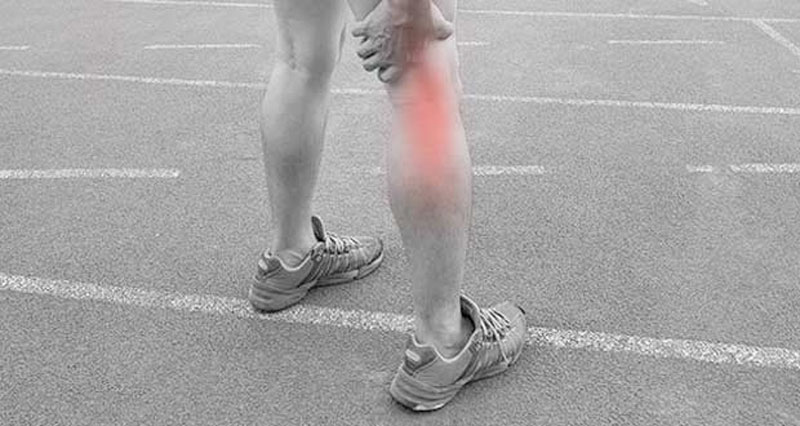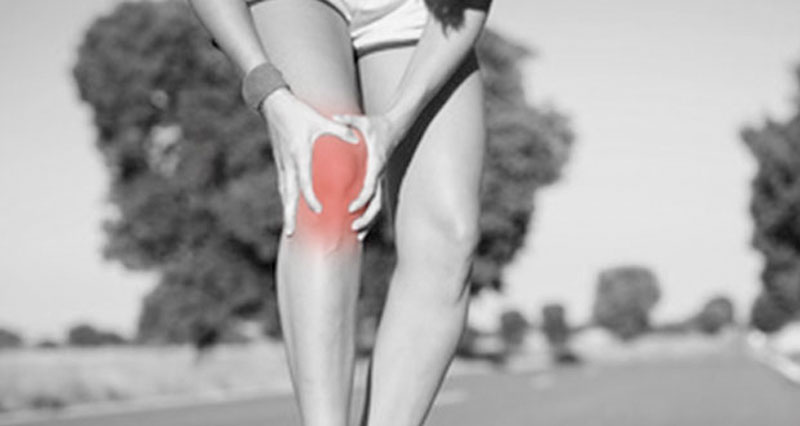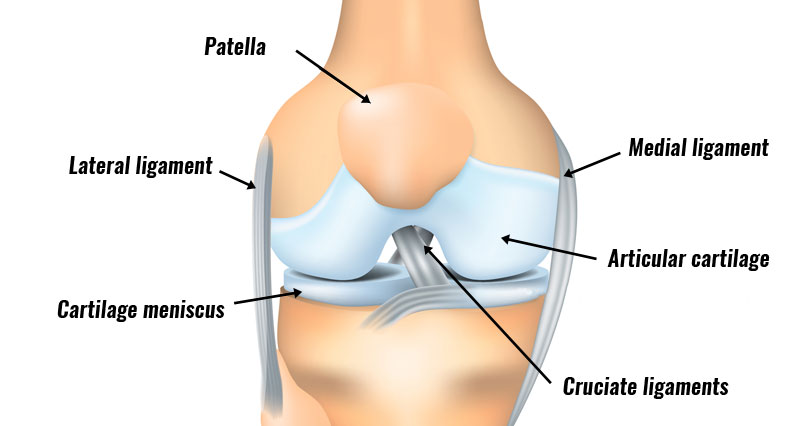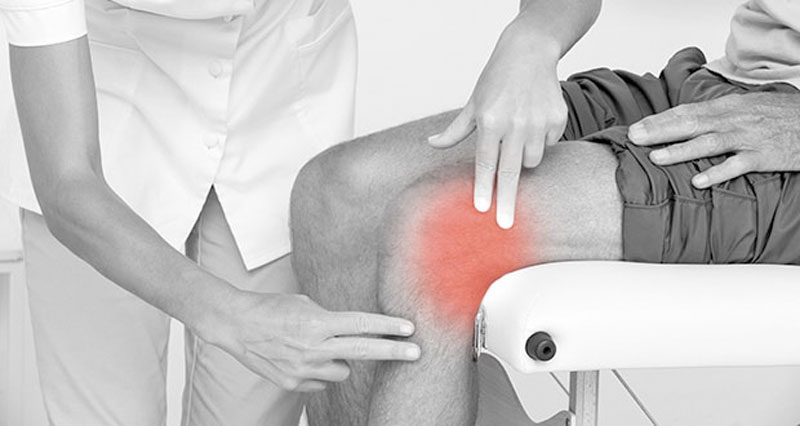
Pain on the outside of the knee or lateral knee pain usually develops gradually over time, for example, Iliotibial band syndrome and Osteoarthritis. However, sudden onset acute injuries such as lateral knee sprain, or torn cartilage are also common in sport. Here we explain the common and not so common causes of lateral knee pain.
Medically reviewed by Dr Chaminda Goonetilleke, 1st Dec. 2021
Select type of injury or rehabilitation programs:
Gradual onset lateral knee pain
Chronic knee pain develops gradually over time through overuse or following an acute injury which has not healed properly.
Iliotibial band syndrome
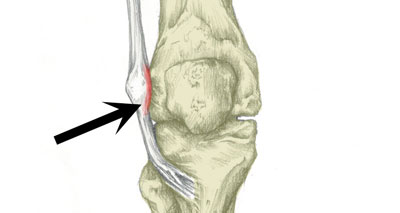
One of the most common causes of pain on the outside of the knee is Iliotibial band syndrome. It is also known as Iliotibial band friction syndrome (ITBFS) or runners knee and is common in runners, cyclists and soldiers. Symptoms consist of:
- Pain and inflammation on the outside of your knee.
- Symptoms develop gradually, often occurring at roughly the same time as a run.
- The pain usually eases with rest, only to return again when training resumes.
Lateral cartilage meniscus injury
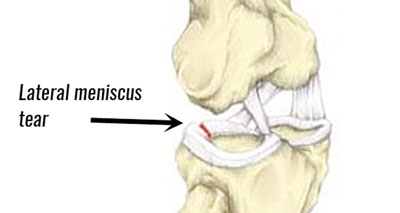
A lateral meniscus tear is an injury to the cartilage meniscus. These are semi-circular discs found in the joint. A torn meniscus can be sudden onset, acute knee injury, or it can develop gradually from wear and tear. Symptoms include:
- Pain on the outside of your knee, along the joint line.
- Pain may be worse when squatting, especially deep squats.
- More often than not your knee will be swollen and may also lock or give way.
- More on Lateral cartilage meniscus tear
GO MOBILE!
Take your program with you to the gym or training field. Our step-by-step rehabilitation app tells you what treatment and exercises to do each day and tracks your progress.
Download now!




Lateral ligament sprain
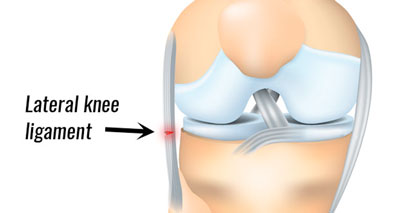
A lateral ligament sprain is a knee injury involving a tear to the ligament on the outside of the knee. Symptoms include:
- Pain on the outside of the knee.
- Swelling over the outside of the joint.
- Symptoms vary from mild pain to knee instability depending on the severity of the sprain.
- More on Lateral ligament sprains
- Go to LCL sprain rehabilitation program
Patellofemoral pain
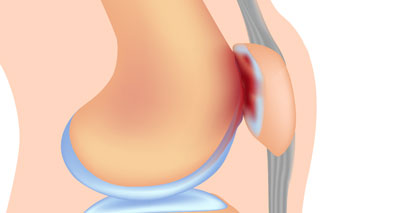
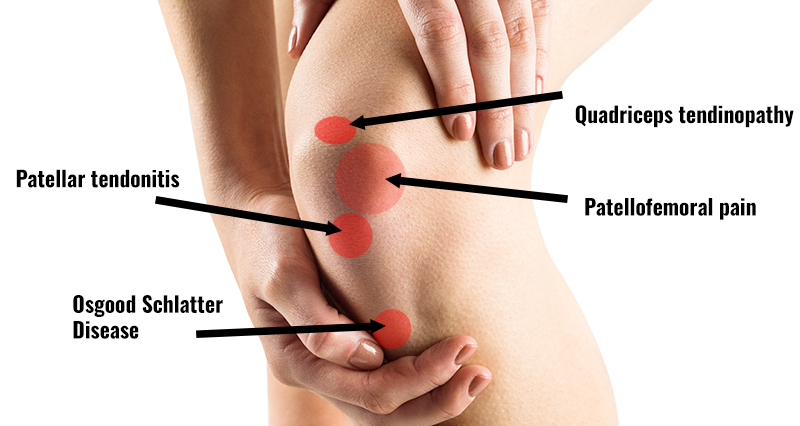
Patellofemoral Pain Syndrome (PFPS) is better known for causing pain at the front of your knee and around your patella (kneecap). It occurs when the patella is out of alignment and rubs on the femur bone underneath. Symptoms include:
- Aching pain in the knee.
- Tenderness and swelling which is mostly at the front of your knee around the patella.
- Symptoms can also occur over the outside of your knee.
- Pain is often worse when walking up and down hills, or when sitting for long periods.
- More on Patellofemoral Pain Syndrome
Osteoarthritis
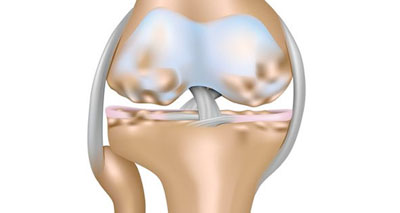
Osteoarthritis is wear and tear of the knee joint. This results in degeneration of cartilage which lines and protects the ends of your bones. Eventually, the bone will begin to wear away. Symptoms include:
- Deep aching pain is felt, usually on the inside of the knee but can also affect the outside of the knee.
- Symptoms are worse after exercise.
- Joint swelling and/or joint stiffness are common.
- More on Osteoarthritis in the knee
Biceps femoris tendinopathy/tendinitis
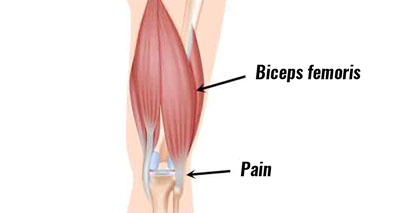
Biceps femoris tendonitis is inflammation or degeneration of the hamstring tendon at the point where it inserts into the back of the knee. Symptoms include:
- Tenderness and swelling at the back of the knee where the tendon attaches.
- The back of the knee may feel still first thing in the morning, or after sitting for long periods of time.
- More on Biceps femoris tendinopathy
Synovitis
Synovitis is inflammation of the synovial membrane in the knee joint. The synovial membrane contains the synovial fluid which helps lubricate the knee. Symptoms include:
- Swelling and stiffness in your knee joint.
- You may have had a recent knee injury, arthritis or gout.
- More on Synovitis
Referred knee pain
Pain on the outside of the knee may result from injuries and problems elsewhere in the body, particularly sciatic pain from the lower back and hip.
- More on Sciatica
Sudden onset/acute lateral knee pain
The following injuries are common causes of acute lateral knee pain. You will be aware of a specific point in time when your injury occurred.
Lateral cartilage meniscus injury
A lateral meniscus tear is an injury to the cartilage meniscus. These are semi-circular discs found in the joint. A torn meniscus can be sudden onset, acute knee injury, or it can develop gradually from wear and tear. Symptoms include:
- Pain on the outside of your knee, along the joint line.
- Pain may be worse when squatting, especially deep squats.
- More often than not your knee will be swollen and may also lock or give way.
- More on Lateral cartilage meniscus tear
Lateral ligament sprain
A lateral ligament sprain is a knee injury involving a tear to the ligament on the outside of the knee. Symptoms include:
- Pain on the outside of the knee.
- Swelling over the outside of the joint.
- Symptoms vary from mild pain to knee instability depending on the severity of the sprain.
- More on Lateral ligament sprains
Superior (proximal) tibiofibular joint sprain
The tibiofibular joint is the point in the knee where the tops of the shin bones (tibia and fibula) join. Dislocation of this joint is likely to have been caused by an impact or fall onto the knee, particularly when it is in a fully bent position. Symptoms include:
- Pain and swelling on the outer surface of your shin.
- In addition, the top of the fibula bone may appear more prominent than normal on the outside of your knee.
- More on Tibiofibular joint sprain
Important: Causes of lateral knee pain not to be missed:
Although these are not particularly common causes of pain on the outside of the knee, more serious complications may occur if they are missed and go untreated.
Peroneal nerve injury
Peroneal nerve injury is caused by a direct impact to the outside of the knee which damages the peroneal nerve.
Symptoms which might distinguish a Peroneal nerve injury from a straightforward contusion include numbness or tingling in the front or side of the lower leg.
As a result, the patient will also have weakness lifting the foot up, and in severe cases, a sign known as ‘foot drop‘ will occur. A patient with foot drop will be unable to lift the foot up properly when walking and may tend to drag the toes.
- More on Peroneal nerve injury
Slipped capital femoral epiphysis
A Slipped capital femoral epiphysis is a hip injury more common in boys aged 11 to 16 years old. The head of the femur slips away gradually from the rest of the bone causing hip pain, which may radiate to the outside of the knee.
Perthes’ disease
Perthes’ disease is a hip condition which affects children, most commonly aged between four and eight. Symptoms of tiredness and groin pain are common and the patient may also have a noticeable limp.
If Perthes’ disease is suspected then seek medical advice as soon as possible because early intervention is necessary to prevent future problems.
- More on Perthes’ disease
Rehabilitation & exercises
We have the following knee rehabilitation programs available on our sports injury rehabilitation app:
We also have a number of strapping & taping tutorials:
References & further reading
- Baker RL, Fredericson M. Iliotibial Band Syndrome in Runners: Biomechanical Implications and Exercise Interventions. Phys Med Rehabil Clin N Am 2016;27(1):53–77.
- Andrish JT1. Meniscal Injuries in Children and Adolescents: Diagnosis and Management. J Am Acad Orthop Surg. 1996 Oct;4(5):231-237.
- Kocher MS, Klingele K, Rassman SO. Meniscal disorders: normal, discoid, and cysts. Orthop Clin North Am 2003;34(3):329–40.