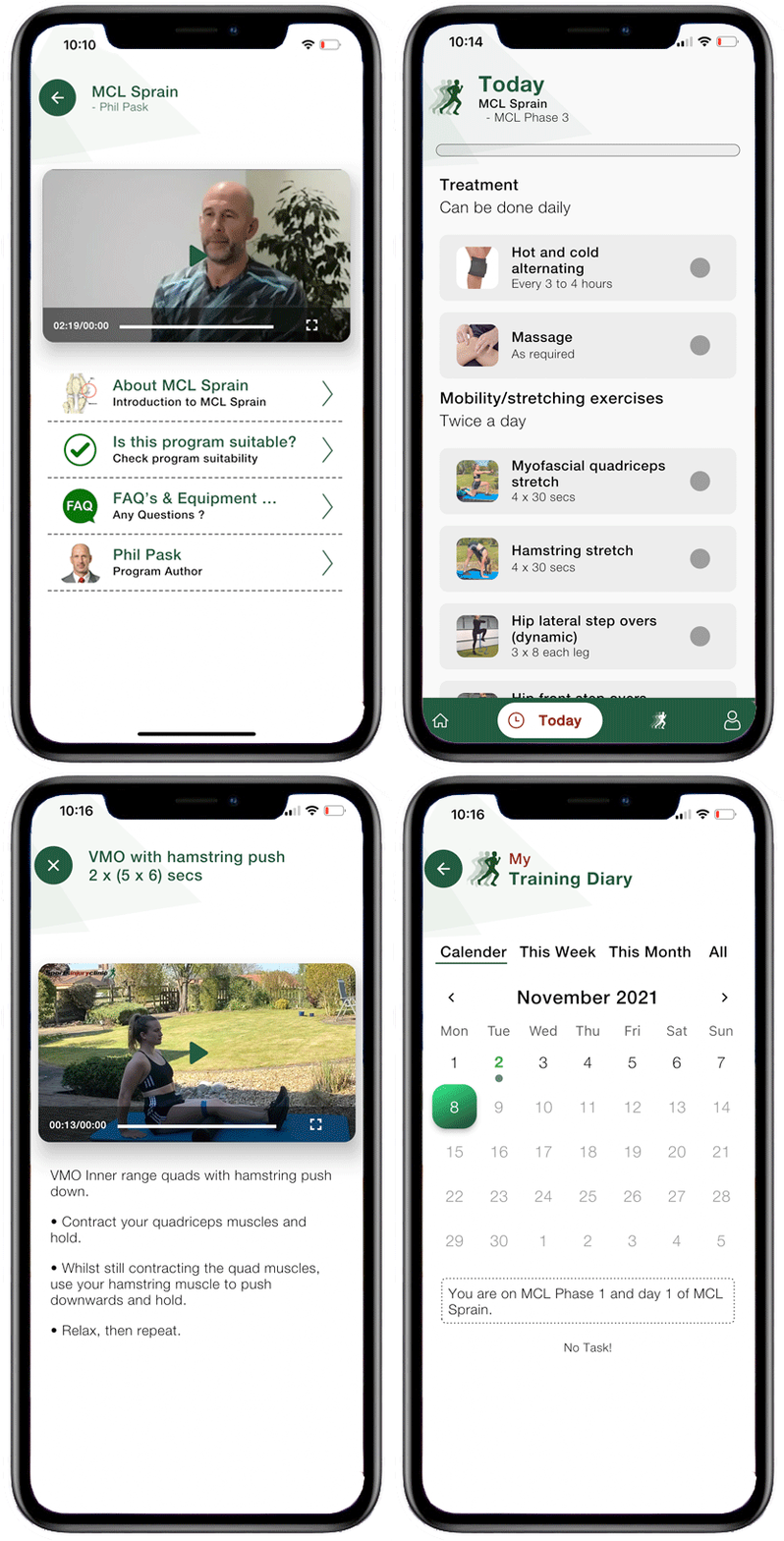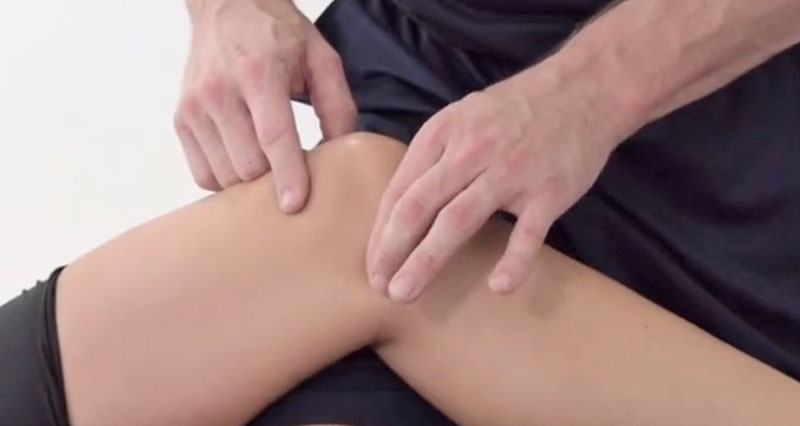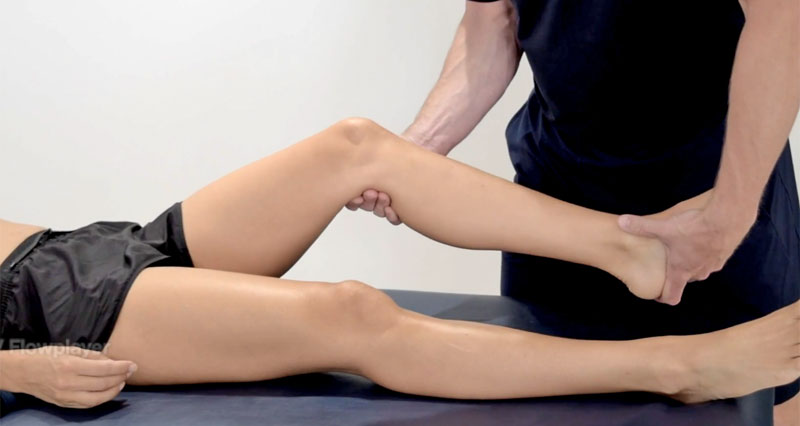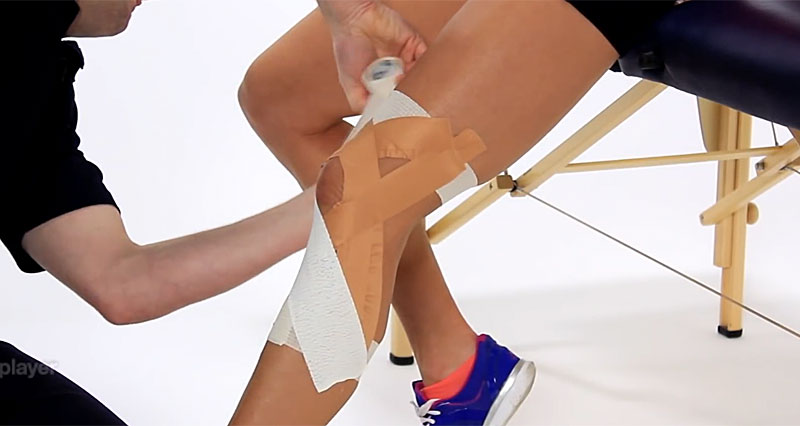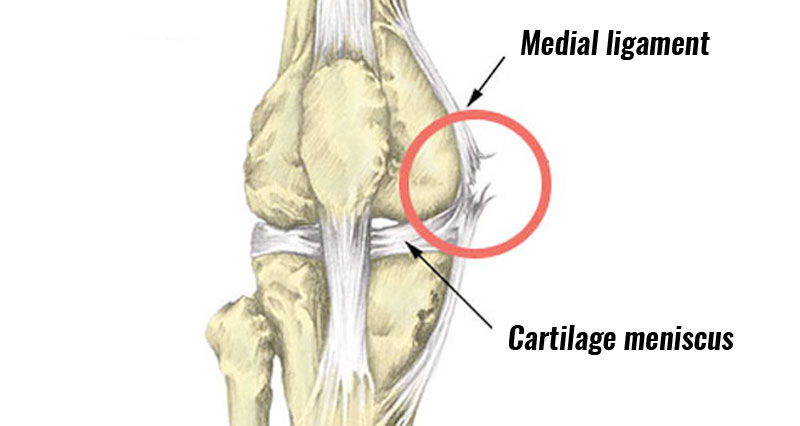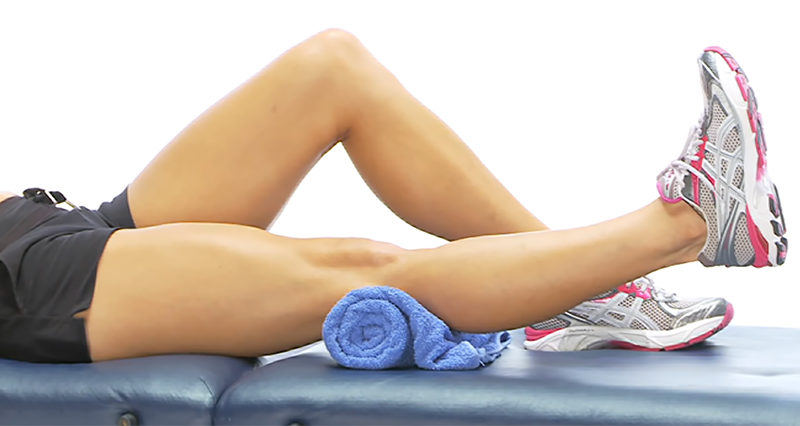
MCL sprain exercises should form part of a full rehabilitation program. Mobility, stretching, strengthening, proprioception, and functional and sports-specific exercises should all be included.
Medically reviewed by Dr. Chaminda Goonetilleke, 13th Dec. 2021
We always recommend seeking professional advice before starting any medial ligament strengthening exercises.
Mobility & Stretching | Strengthening | Rehabilitation Program
See our full MCL rehabilitation program for details of when the exercises below fit into the overall rehabilitation program.
MCL sprain mobility exercises
Begin mobility exercises as pain will allow. The aim is to regain and maintain full joint mobility.
Heel slides
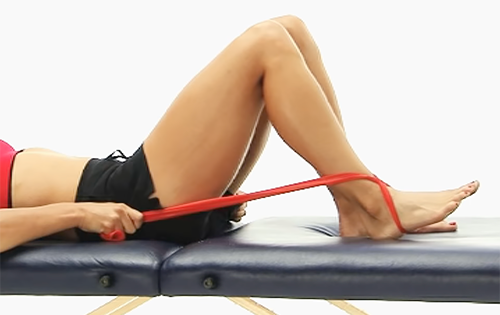
Teaching point:
- Lie on your back.
- Slowly move your heel towards your buttocks
- Use a towel or strap wrapped around your ankle to increase movement
- However, do not force it, especially in the early stages, or if you have any pain
View our full MCL rehab program for more exercises
MCL sprain strengthening exercises
These should begin as soon as pain allows. Begin with isometric or static muscle contractions. See our MCL rehab program for full details on all strengthening exercises.
Isometric quads contractions
Again, begin this MCL sprain exercise as soon as pain allows. You can do this one on a daily basis.
It may even be possible to continue with this exercise even if you are in a plaster cast.
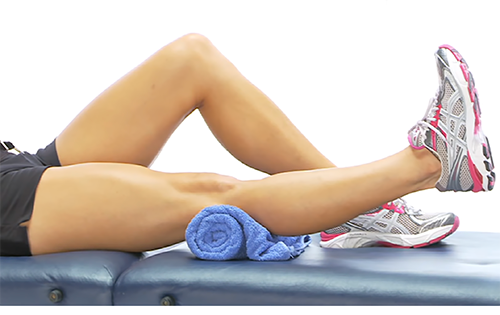
Teaching point:
- Contract your quadriceps muscles at the front of the thigh
- Hold for 10 seconds
- Relax and rest for 3 seconds
- Repeat this 10 to 20 times
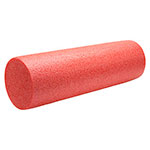
- You can also perform this exercise with a rolled up towel or foam roller under the knee
Calf raises
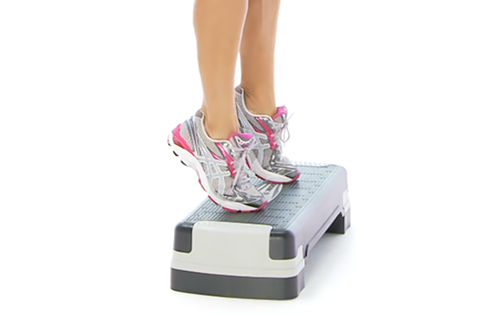
Teaching point:
- Stand with feet shoulder-width apart and close to something to hold on to for balance
- Lift your heels up as high as possible off the floor
- In the early stages, this exercise must be done with both legs at the same time.
- Slowly lower back to the floor
- Aim for 2-3 sets of 15-20 repetitions
- Later this exercise can be progressed by moving to single leg calf raises.
Leg curl
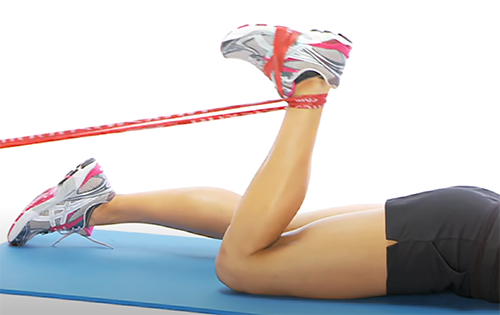
Teaching point:
- Lie on your front and bend the knee up against resistance of ankle weights or a resistance band and gently lower
- Remember to keep your hips firmly on the bench and do not allow them to raise up
- If they rise up then the weight may be too heavy
- Aim for 3 sets of 10 to 20 repetitions initially and as strength improves progress by increasing the resistance to achieve 3 sets of 8 to 10 to failure
Hip abduction
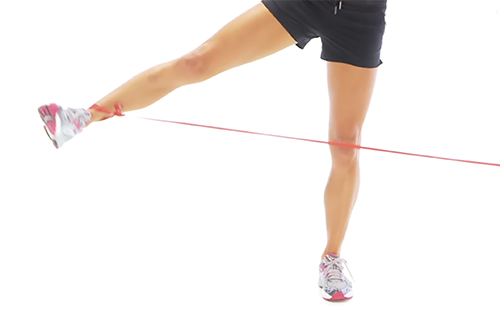
Teaching point:
- Stand on the uninjured leg only and take the injured leg out to the side as far as possible
- Slowly bring it back to the centre. Make sure you have something to hold onto
- Use a resistance band or ankle weights for increased difficulty
- Aim for 3 sets of 10 to 12 reps
Hip extension
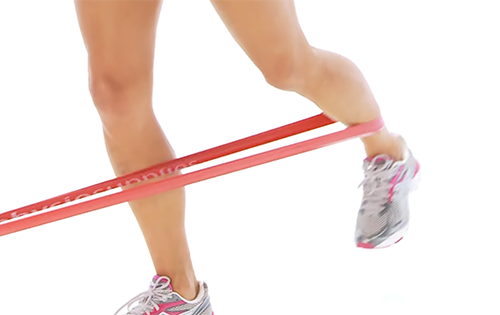
Teaching point:
- To work the buttocks and hamstrings, wrap the band around the ankle and anchor it to a table leg
- The athlete faces the anchor point and starting with the band just taut, pulls the leg backwards against the band’s resistance
- Slowly return to the starting position, maintaining control throughout
Half squat
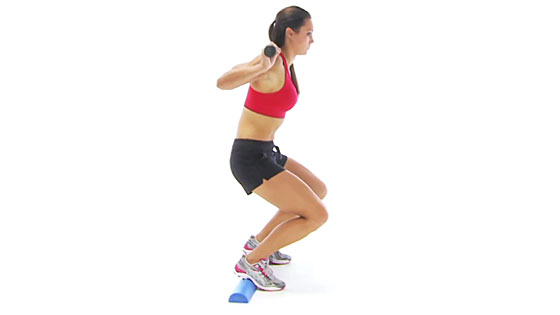
Teaching point:
- Stand with the feet just wider than shoulder width and back straight
- Squat down halfway to horizontal or about 45 degrees and return to standing
- Aim for 3 sets of 10 to 20 repetitions during rehabilitation
- Progress this exercise by adding weight, increasing the depth of the squat to 90 degrees or near horizontal thighs or moving to single leg squats
Lunges
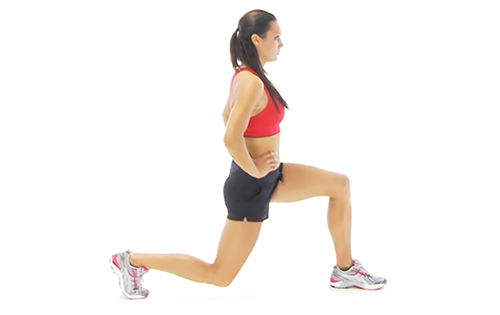
Teaching point:
- Lunges are a slightly easier version of a squat and are sometimes called split squats
- Start with a wide stance. Bend the back knee towards the floor, but don’t let it touch
- Keep your back upright throughout and don’t let the front knee move forwards past the toes
- Start with 2 sets of 10 reps with the injured leg in front and then do 2 sets of 10 with the injured leg behind. Gradually increase to 3 sets of 15
- To make it harder, you can add either a dumbbell in each hand of a barbell over the shoulders
Dynamic step back
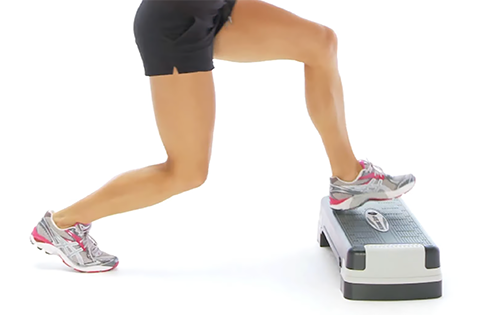
Teaching point:
- Step ups involve stepping up and down on a step or bench
- Try to lead with alternate legs, or do 10 reps with one leg leading and then swap over to do the same on the other leg
- Holding weights can increase the difficulty of this exercise
Bridge exercises
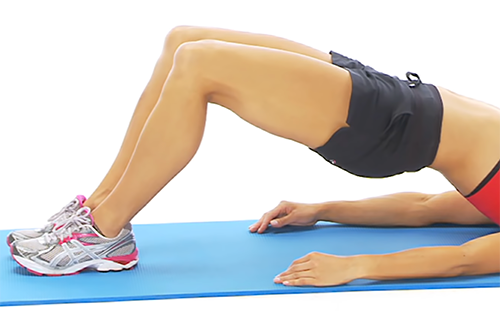
Teaching point:
- The athlete lies on their back, knees bent and pushes the hips upwards to work the gluteal muscles and hamstrings
- Use both feet on the floor pushing up to begin with
- Hold the position briefly and then lower
- Begin with 3 sets of 8 reps building to 3 sets of 12 reps then progress the exercise to single-leg bridges
Single-leg bridges are done in the same way ensuring you squeeze the gluteal muscles and aim to maintain a straight line from the shoulder on the ground to the knee at the top point of the exercise. Again, begin with 3 x 8 reps and build up.
MCL sprain proprioception exercises
Proprioception or movement control exercises involve balance and coordination which is often damaged by a knee injury. Standing on one leg with your eyes closed is one way of measuring this.
Balance board exercises
Wobble boards are most commonly used in the rehabilitation of ankle injuries such as ankle sprains, although they should also be used for other lower leg and knee injuries.
They can also be used for upper limb injuries, especially the shoulder. This is important for people involved in throwing or similar activities.
Functional exercises for MCL sprain
These tend to be more advanced sports-specific type exercises which bridge the gap between normal rehabilitation and returning to full sports training or playing.
Some exercises will depend on the type of sport you play and you should seek professional advice from your coach or physio.
Plyometric exercises
Plyometrics or plyometric exercises are a form of strengthening exercise, incorporating jumping, bounding and hopping movements, which work to increase power in the muscles.
Power is used in the vast majority of all sports and so plyometrics can be used to help develop this for most athletes.
Agility drills
Agility exercises involve changing direction, using small hurdles and agility ladders. The aim is to bridge the gap between normal running and getting back to full-match fitness.
This should be done gradually. For example, if you are a footballer then playing just 20 minutes of a game to start with and building up is a good place to start. Going straight back into a full-match situation can risk re-injury.
References
- Indelicato PA. Isolated medial collateral injuries in the knee. J Am Acad Orthop Surg 1995;3(1):9–14.
MCL Sprain Rehabilitation Program
Our step by step MCL sprain rehabilitation program takes you from initial injury to full fitness.
Start now for free: