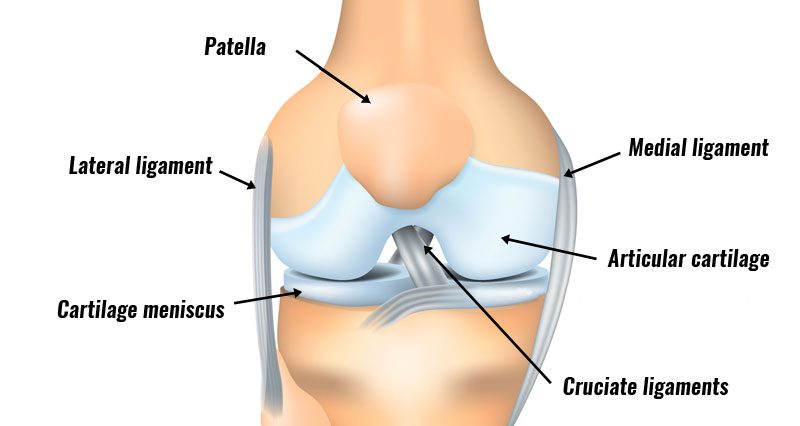
An acute knee injury is a sudden onset sprain, strain, dislocation or fracture, usually caused either by direct trauma or twisting. Here we explain the most common and not-so-common injuries causing acute knee pain.
Medically reviewed by Dr Chaminda Goonetilleke, 31st Dec. 2021
Knee ligament sprains
A knee sprain is a term that describes a tear to any of the four ligaments in the knee. Knee sprains often involve damage to other structures in the joint.
Anterior Cruciate Ligament sprain (ACL)
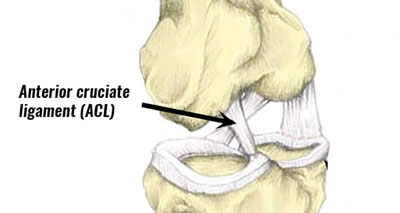
A torn ACL or anterior cruciate ligament sprain is common in contact sports involving quick changes of direction. Symptoms include:
- Immediate, acute knee pain following a collision or twisted knee.
- Swelling is likely to develop rapidly.
- You may have felt or heard a pop or crack in the joint at the time of injury.
- More on ACL sprain

Medial knee ligament sprain (MCL)
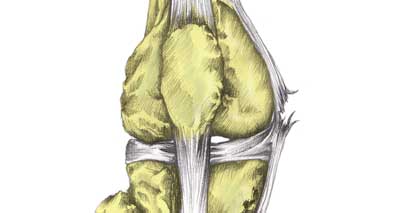
An MCL sprain is a tear to the ligament on the inside of the knee joint. Direct impact to the knee or twisting are common causes. Symptoms include:
- Sudden onset pain located on the inside of the knee.
- Rapid swelling.
- Injuries are grade one, two or three depending on how bad they are.
- Pain will range from mild tenderness to severe pain and instability.
- Often MCL sprains occur in conjunction with a medial cartilage meniscus injury.
More on MCL sprain
Go to MCL sprain rehabilitation program
Posterior cruciate ligament sprain (PCL)
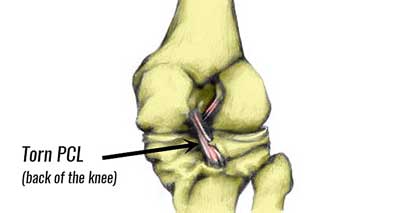
A PCL injury is a tear to the posterior cruciate ligament deep in the knee joint. Impact to the front of the knee, or twisting are common causes. Symptoms include:
- Immediate pain which may radiate into the lower leg.
- There may be swelling, but not always.
- Your knee may feel unstable.
- Most PCL sprains are treated conservatively but some may require surgery.
- More on PCL sprain
Lateral knee ligament sprain (LCL)
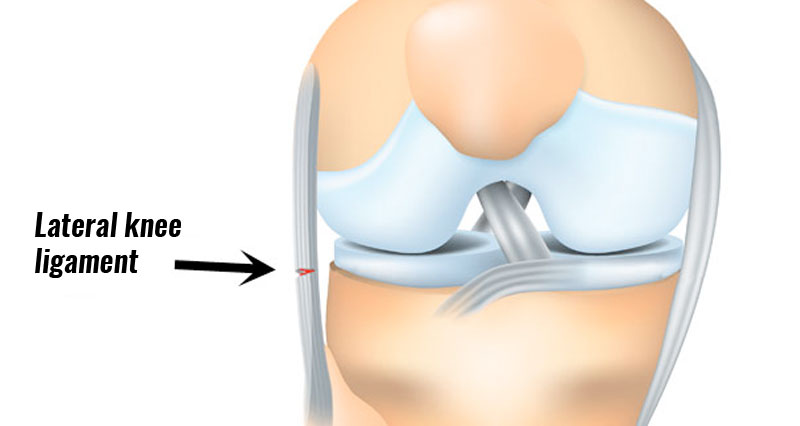
Tearing the ligament on the outside of the knee can occur after an impact to the inside of the knee (which pushes the knee outwards). The symptoms can vary in severity, and include:
- Tenderness on the outside of the knee.
- Swelling may be present, depending on how bad your injury is.
- You will have a feeling of laxity with a more serious injury.
- More on LCL sprain
- Go to LCL sprain rehabilitation program
Coronary ligament sprain
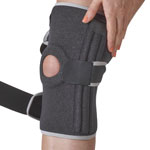
This often occurs at the same time as lateral ligament injuries and has similar symptoms to a cartilage meniscus injury. It can be caused by twisting movements and changes of direction.
- A sharp pain will be felt.
- Your knee will feel tender when pressing in along the joint line.
- There is unlikely to be any swelling.
- More on Coronary ligament sprain
Unhappy triad of the knee
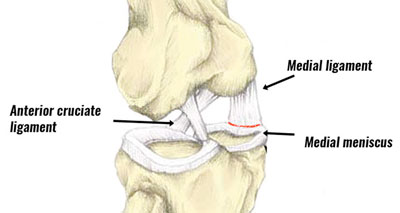
The unhappy triad of the knee involves damage to 3 of the 4 major ligaments in the knee. It occurs after a traumatic injury with symptoms:
- Severe pain.
- Rapid swelling.
- An audible tear at the time of impact.
- Difficulty in moving the knee.
- More on Unhappy triad of the knee
Knee cartilage injuries
Cartilage injuries involve damage to either the smooth, hard articular cartilage at the ends of bones or under the patella. Or injury to the semicircular meniscus.
Medial meniscus tear
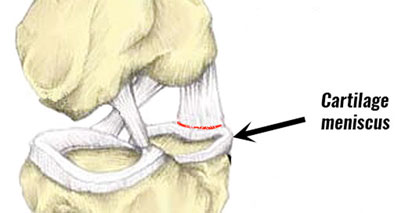
A tear of the cartilage meniscus on the inside of the knee is commonly caused by direct impacts and twisting. However, it can occasionally develop over time through degeneration. Symptoms include:
- Sudden onset pain on the inside of the knee.
- Swelling may or may not occur. This will depend on how bad the injury is or whether the medial ligament is also torn.
- If the injury is recent then it may feel tender along the joint line on the inside of the knee.
- More on Medial meniscus sprain
Articular cartilage injury
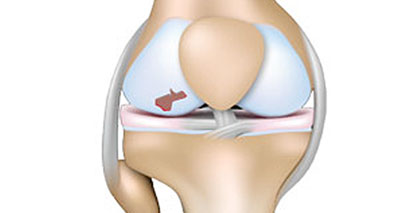
The cartilage at the end of the bones can be damaged by trauma to the knee or other injuries. Symptoms include:
- Recurrent knee pain, inflammation, and swelling
- There may be ‘locking’ in the joint.
- More on Articular cartilage injury
Tendon strains of the knee joint
This is a tear or rupture to a tendon that joins muscle to bone in the knee.
Patella tendon rupture
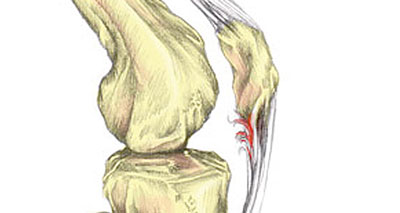
This is a tear of the patella tendon (sometimes called patella ligament) which connects the kneecap (patella) to the front of the shin.
- It is often caused by jumping or an explosive load.
- Patella tendon ruptures are very painful.
- A pop may be heard at the time of injury and there may be swelling, particularly at the bottom of the patella.
- Putting weight on the knee or straightening the leg will probably be impossible.
- More on Patella tendon rupture
Biceps femoris tendon avulsion
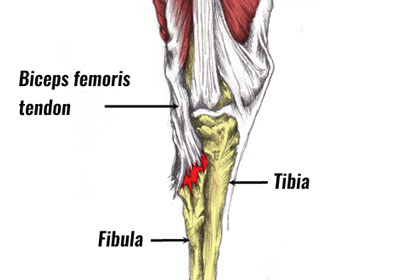
This occurs at the back of the knee when the tendon tears and takes a piece of bone with it.
- It will cause a sudden sharp pain at the back of the knee which normally prevents you from continuing the activity.
- Swelling will appear at the point of injury and it will feel tender.
- The hamstring will likely feel weak and pain will be reproduced when trying to bend the knee against resistance.
- More on Biceps femoris tendon avulsion
Hamstring tendon strain
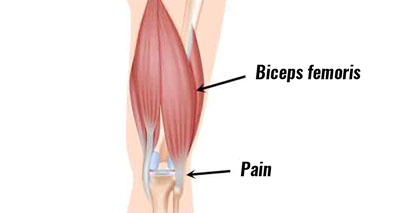
The tendons that insert into the back of the knee can become ruptured (either fully or partially). The biceps femoris tendon is most common. Symptoms include:
- Sudden sharp pain at the back of the knee.
- The area may become swollen and feel sore.
- Sometimes the area may feel warm.
- Bending the knee against resistance can reproduce the pain.
- More on Hamstring tendon strain
Fractures, contusions & dislocations
The following involve dislocation or fracture to the patella (kneecap) or the tibia bone:
Patella dislocation
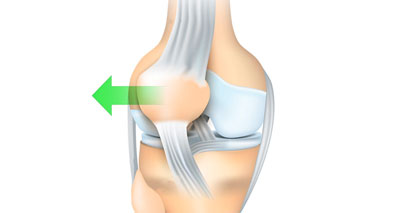
A dislocated kneecap happens when the patella displaces out of its normal position, usually around the outside of the joint.
- You will have immediate pain.
- Swelling in the joint will develop quickly.
- The kneecap may be visibly displaced, although it may dislocate and quickly return back to its original position.
- More on Patella dislocation
Acute patella injury
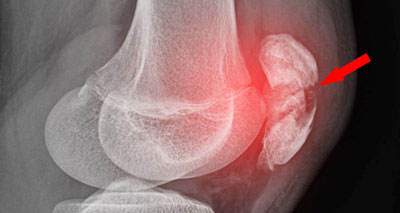
This is a direct impact or trauma to the kneecap. It can be caused by a fall onto the knee, or from contact with an opponent.
- It will cause sudden acute knee pain.
- Bruising, and possibly swelling, may appear and it may be difficult to walk.
- Depending on the severity of your injury, the pain may be localised to the kneecap or spread to the whole joint.
- If the impact is particularly severe the patella may become fractured.
- More on Acute patella injury
Knee contusion
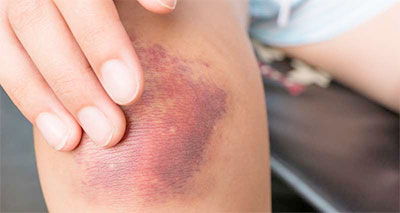
Otherwise known as a bruised knee, this injury is caused by an impact on the knee. Instant pain and bruising are the main symptoms and the area may feel tender. The symptoms can worsen depending on the severity of the injury.
- More on Knee contusion
Dislocated knee
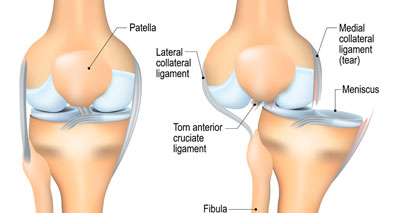
When the thigh bone and shin bone move apart, the knee becomes dislocated which is a very serious injury.
- Immediate pain, deformity, and rapid swelling and bruising are the main symptoms.
- It will be impossible to put weight on the leg.
- Seek medical attention immediately.
- More on Dislocated knee
The following are not common causes of acute knee pain, but it is important they are not missed as more serious complications could arise if they are:
Tibial plateau fracture
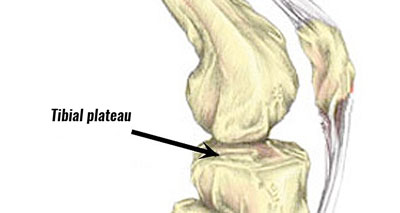
Located at the top of the shin bone, the tibial plateau may fracture in high-speed accidents like skiing or horse-riding injury.
- Symptoms include sudden acute knee pain with joint swelling.
- More on Tibial plateau fracture
Osteochondral knee fracture
This often occurs with other injuries and causes immediate pain at the time of impact, which will get worse when bearing weight. There will also be rapid swelling and the knee joint may lock and feel unstable.
- More on Osteochondral knee fracture
Knee rehabilitation programs

We have full, step-by-step rehabilitation programs for the following knee injuries:
- ACL/anterior cruciate ligament sprain.
- MCL sprain/medial collateral ligament sprain.
- LCL sprain/lateral collateral knee ligament sprain.
- Jumper’s knee/patella tendonitis.
References
- Myklebust G, Bahr R. Return to play guidelines after anterior cruciate ligament surgery. Br J Sports Med 2005;39(3):127–31