A rotator cuff tear is a common cause of shoulder pain, particularly in athletes involved in throwing or overhead sports. Injuries range from mild strains to partial or complete tears of the rotator cuff tendons. Symptoms often include pain when lifting the arm, weakness, and reduced shoulder function.
Symptoms
Symptoms of a rotator cuff injury include:
- Shoulder pain, often at the time of injury
- Pain when lifting the arm or reaching overhead
- Weakness in the shoulder
- Pain that may radiate down the arm
- Clicking, snapping, or popping at the time of injury
- Difficulty sleeping on the affected side
Read more on the diagnosis
When should I see a doctor?
- Seek medical attention if your pain does not improve after a few days
- You are unable to use your arm for normal daily activities
- You cannot lift your arm or move your shoulder properly
- You have a significant weakness in the shoulder
What is a rotator cuff injury?
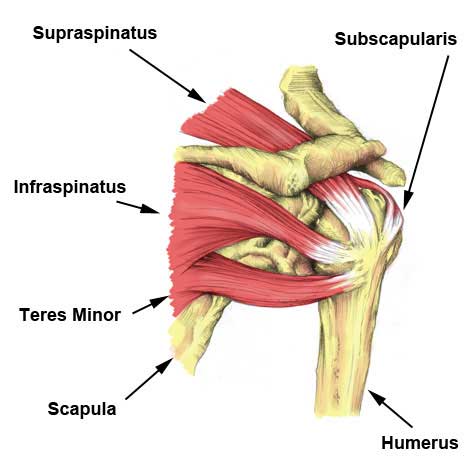
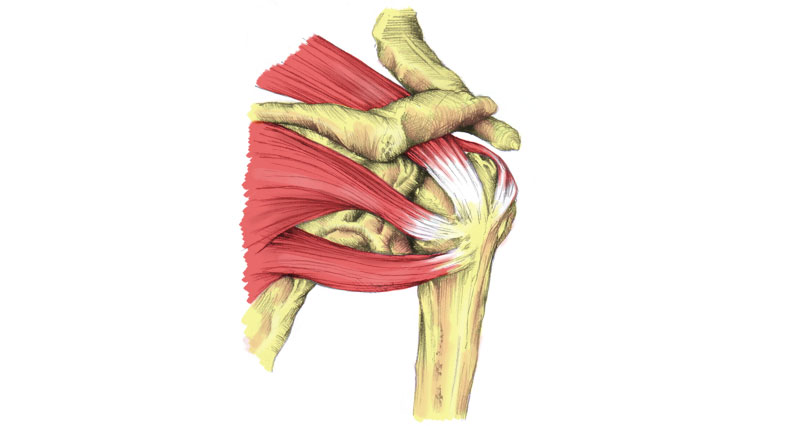
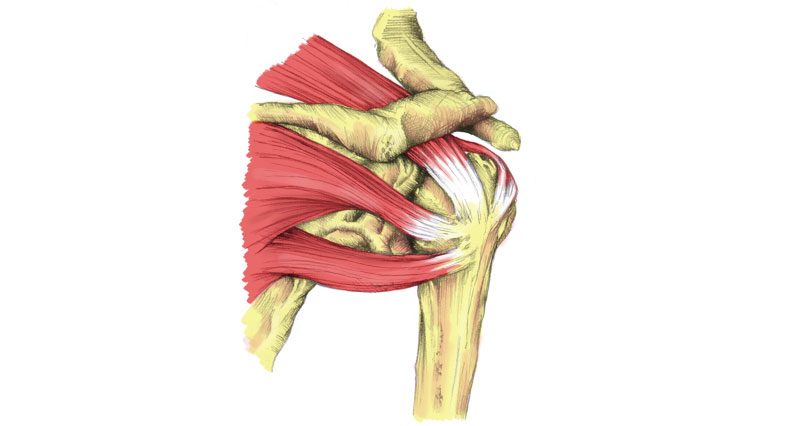
The rotator cuff is a group of four muscles and tendons that stabilise the shoulder joint.
These include:
- Supraspinatus
- Infraspinatus
- Teres minor
- Subscapularis
They work together to control shoulder movement, particularly during overhead activity. Because the shoulder has a large range of motion, these tissues are more vulnerable to overload and injury.
What causes a rotator cuff injury?
Rotator cuff injuries commonly occur due to:
- Repetitive overhead activity
- Sudden overload or trauma
- Poor shoulder strength or control
- Age-related wear and tear
In throwing sports, injury often occurs during the deceleration phase after release.
Treatment for a rotator cuff strain consists of:
Treatment aims to reduce pain, allow the tissues to heal, and restore full shoulder function through a structured rehabilitation program. Recovery time will vary depending on the severity of the injury.
What can the athlete do?
- Rest from aggravating activities
- Apply ice or cold therapy to reduce pain and swelling
- Use cold therapy for 10–15 minutes every 1–2 hours in the early stages
- A sling may be used short-term for more severe injuries
- Begin gentle mobility exercises once pain allows
- Progress to strengthening exercises as symptoms improve
Rehabilitation is essential for full recovery. Read more about our rotator cuff rehabilitation program and rotator cuff exercises to improve strength, mobility and shoulder control.
What can a Sports Injury professional do?
A healthcare professional may:
- Prescribe pain relief or anti-inflammatory medication
- Use imaging such as X-rays or MRI scans to confirm the diagnosis
- Recommend a corticosteroid injection in some cases
- Provide a structured rehabilitation program
- Use hands-on treatment, such as soft tissue therapy, if appropriate
Do I need rotator cuff surgery?
If your injury is severe and you are young and active, surgery may be required to repair the tear. People who are more likely to need surgery include:
- Athletes under 60 years old
- Patients with complete tears of the rotator cuff tendon or muscle
- If conservative treatment (rest, ice and exercises) has not improved symptoms after 6 weeks
- Professional athletes who require a faster return to sport
- If your job requires constant shoulder use, surgery for a severe injury may be preferable
Recovery time for a torn rotator cuff will vary depending on several factors. Conservative treatment has a 40–90% success rate.
Surgery often has good results. Studies report satisfaction rates of up to 94%, with improved pain and function. However, very extensive tears may have a poorer outcome. Age is also a factor, and recovery may take longer in older individuals.
Rehabilitation & exercises
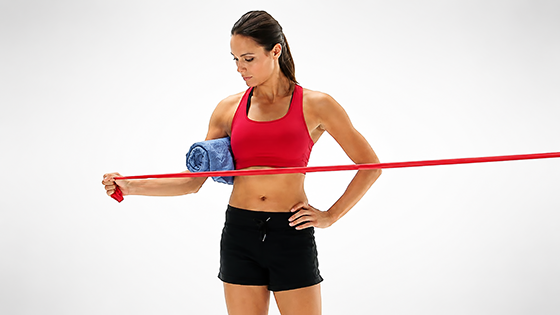
Shoulder rehabilitation exercises aim to restore full mobility, improve strength and return the shoulder to normal function. Begin with mobility and stretching, then progress to strengthening and sport-specific exercises. All exercises should be pain-free.
More on rotator cuff injury
References & further reading
- Namdari S, Baldwin K, Ahn A et al. Performance after rotator cuff tear and operative treatment: a case-control study of major league baseball pitchers. J Athl Train 2011;46(3):296–302.
- Kuhn JE, Dunn WR, Sanders R et al. Effectiveness of physical therapy in treating atraumatic full-thickness rotator cuff tears: a multicenter prospective cohort study. J Shoulder Elbow Surg 2013;22(10):1371–9.
- Ainsworth R, Lewis JS. Exercise therapy for the conservative management of full-thickness tears of the rotator cuff: a systematic review. Br J Sports Med 2007;41(4):200–10.
- Levy O, Mullett H, Roberts S et al. The role of anterior deltoid re-education in patients with massive irreparable degenerative rotator cuff tears. J Shoulder Elbow Surg 2008;17(6):863–70.